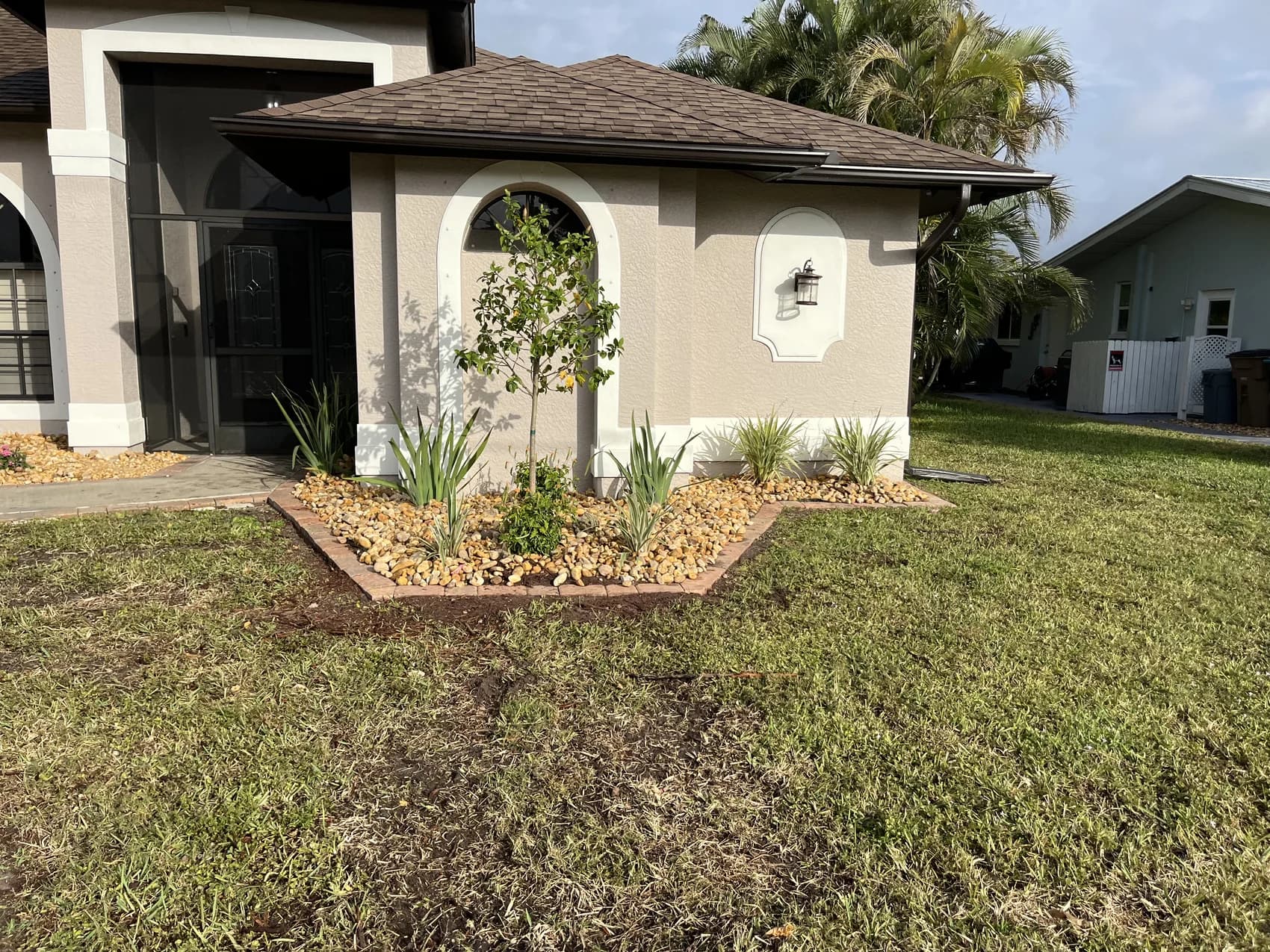
Retaining Walls That
Stay Where You Built Them
Block & stacked stone · Drainage built in · Free on-site measurement
Block and stone retaining walls, raised planters, and canal-side grade changes, built on a compacted base with real drainage behind them. Cape Coral sand and August rain break walls that skip those two steps.
Why Walls Fail in Cape Coral, and What We Do Instead
A retaining wall in Southwest Florida is not really fighting the soil. It is fighting the water in the soil. Our sand drains fast until a summer storm saturates it, and then every cubic foot behind the wall gets heavier and pushes. That is why the leaning walls you see around town are almost never failing at the block. They are failing because nothing was built to get water out.
We build from the bottom up: a trench cut below grade, a compacted base, and the first course buried so the wall has something to stand on when the sand moves. Behind the block goes drainage stone and filter fabric, with weep outlets so a storm has somewhere to send the water. Where the height calls for it, geogrid runs back into the soil and turns the backfill itself into part of the wall.
The result is a wall that still reads straight from the street in ten years, which is the only real test. Most of our wall work is holding a patio line, lifting a bed above a flat yard, or stepping a canal lot down to the water, and it pairs with the rest of the yard. Ask for the wall, the paver patio above it, and the rock beds behind it on one quote and one crew does the whole thing.
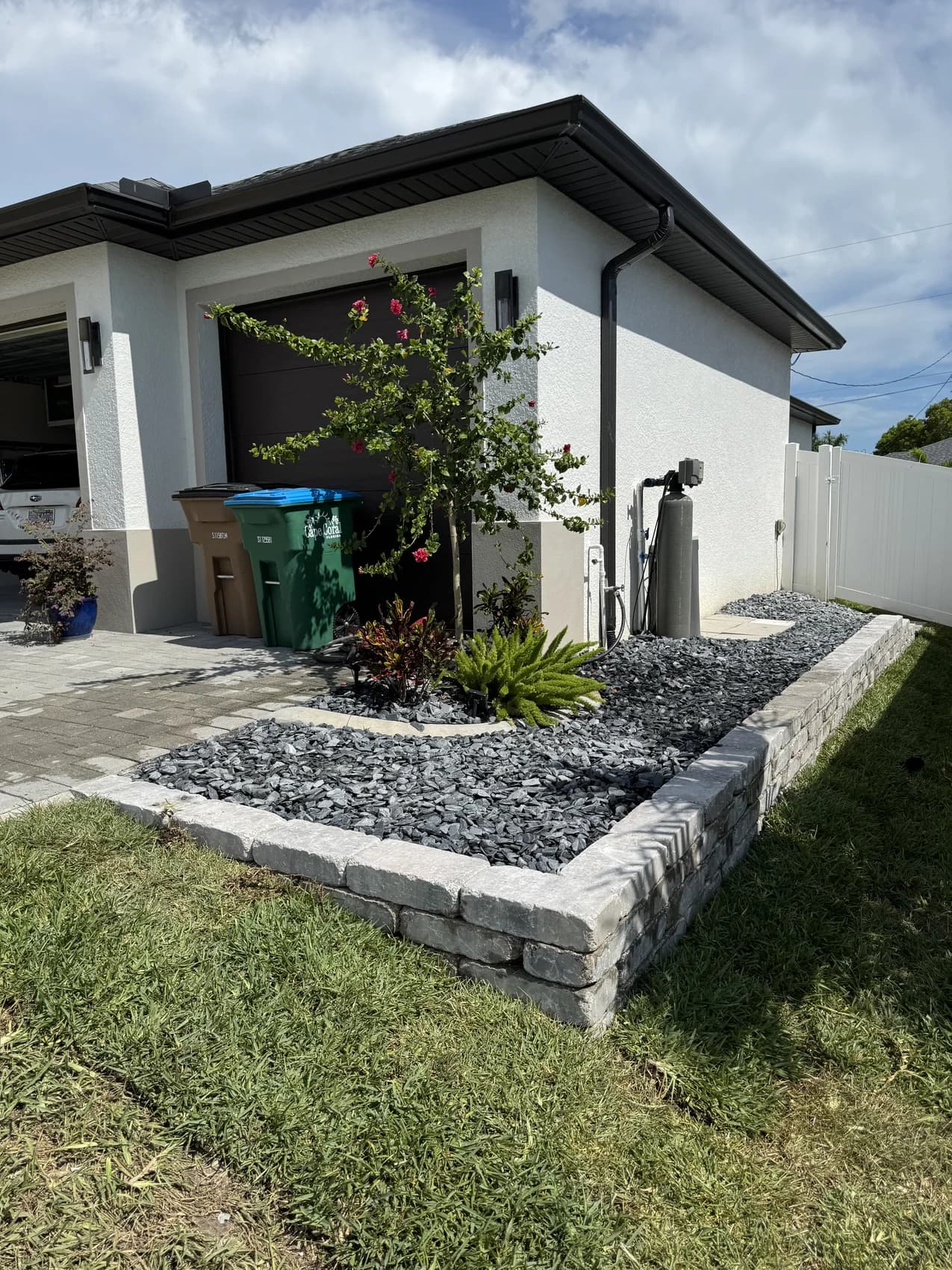
Stacked stone wall and rock bed, Cape Coral. Real Blue Collar Q project photo.
What We Build
Segmental block wall
The workhorse. Interlocking concrete block, set on a compacted base with a buried first course, stepped back as it climbs. Best value per foot for a yard that needs to hold real soil.
Stacked stone face
The same structural build with a natural stone face, used where the wall is the first thing you see from the street or the lanai. Costs more per foot and looks it.
Raised planter wall
Knee-height walls that turn a flat bed into a layered one. Common around pool decks, entries, and canal-side patios where you want height without a full grade change.
Canal and seawall-side grade work
Low walls that hold a patio or bed line back from the water edge. We build these around the seawall, never as a replacement for it. Seawall repair itself is marine contractor work.
What the Quote Covers
Included in every wall
Quoted separately (never snuck in)
Understanding Retaining Walls in Southwest Florida
In Cape Coral and surrounding areas, retaining walls are essential for managing the natural slope of the land and preventing erosion. The region’s sandy soil and frequent summer rains mean that proper drainage is crucial. Retaining walls must be built with materials that can withstand the pressure of the soil and the effects of salt air from the nearby waterways. The design process begins with a site evaluation to determine the best approach for your property. Whether you're looking to create a flat area for a garden or add a functional seat wall, the foundation must be strong and well-drained. In canal lots, extra care is taken to ensure the wall doesn't interfere with water flow or violate local regulations. The right materials and construction techniques ensure the wall remains stable through the wet season and years of use.
Materials That Work in Southwest Florida
Choosing the right materials for your retaining wall is critical in Cape Coral and the surrounding counties. Concrete blocks are a popular choice due to their durability and ability to withstand the region’s harsh conditions. However, they must be installed with proper drainage systems to prevent water buildup, which can lead to failure over time. Natural stone is another option, but it requires careful selection to ensure it can handle the weight and pressure of the soil. Poured concrete is also used for larger structures, offering a seamless look and added strength. When building a raised bed or seat wall, materials like treated wood or composite lumber can be used, but they must be designed with drainage in mind. Plants that thrive in sandy soil and salt air, such as native grasses and hardy shrubs, are often incorporated to add visual appeal and help with erosion control.
What Drives the Budget and How to Compare Quotes
The cost of a retaining wall in Cape Coral depends on several factors, including the size, materials, and complexity of the project. A basic wall using concrete blocks may be more affordable, while a custom design with decorative stone or built-in seating can increase the price significantly. Drainage systems, foundation work and any necessary permits also contribute to the overall cost. When comparing quotes, it's important to look at the materials specified, the labor costs, and whether the contractor includes any additional features like landscaping or irrigation. A detailed breakdown of the work being done ensures you're not comparing apples to oranges. Some contractors may offer a lower price but use cheaper materials or skip important steps, which could lead to problems down the line. Always ask for a clear, itemized estimate that reflects the scope of the project and the quality of the work.
Design and Approval Before Installation
Before any retaining wall or raised bed is installed, the design and approval process must be completed. This is especially important in HOA communities or properties with strict architectural guidelines. Blue Collar Q works with homeowners to ensure the design fits within local regulations and complements the existing landscape. A site visit is the first step, during which the team assesses the terrain, drainage, and any existing structures. This helps determine the best materials and construction methods for the project. Once the design is finalized, the necessary approvals are obtained, whether from the HOA, local government or other relevant entities. This step is crucial to avoid delays or unexpected costs later on. A design consultation, which is credited toward the install, helps homeowners understand the process and make informed decisions about their project.
What to Expect During the First Visit and Install Days
During the first visit, a Blue Collar Q representative will walk the property with you to understand your goals and assess the site. This includes evaluating the soil type, drainage patterns and any potential challenges like canal lots or HOA restrictions. The team will also discuss materials, design options and provide a detailed estimate. Once the plan is approved, the installation begins. The team will prepare the site by clearing the area and ensuring proper drainage is in place. Retaining walls are built in sections, with each layer carefully placed and secured to ensure stability. Raised beds and seat walls are constructed with attention to detail, making sure they are both functional and aesthetically pleasing. The install days are typically spread over a few weeks, depending on the size of the project, and the team works efficiently to minimize disruption to your daily life.
Timing and Seasonal Considerations
In Cape Coral and surrounding areas, the timing of a retaining wall project can affect both the cost and the quality of the work. The best time to install a retaining wall is during the dry season, typically from November through April, when the risk of heavy rain is lower. This allows for better soil stability and reduces the chance of water damage during construction. However, if the project is urgent, it can be scheduled during the wet season with additional precautions, such as using drainage systems and working in shorter sections. Summer rain can also impact the growth of plants used in raised beds, so timing the installation of these features carefully is important. Planning ahead with Blue Collar Q ensures your project is completed efficiently and with minimal disruption, taking into account the unique challenges of Southwest Florida’s climate.
Retaining Walls, FAQ
How much does a retaining wall cost in Cape Coral?
Retaining walls are quoted per project, not off a flat rate, because the price is driven by wall height, block or stone choice, how much soil has to move, and access for equipment. A knee-high planter wall is a different job from a 4 foot wall holding a grade change. We measure on site, price the base prep, drainage, block, and backfill as separate lines, and hand you a written number with no allowance games. Bundled hardscape on the same visit is where the savings are: pavers run $8 per square foot installed and landscape curbing runs $10 per linear foot, both published.
Do retaining walls need drainage in Southwest Florida?
Yes, and it is the part cheap walls skip. Our summer storms drop several inches in an afternoon and saturated sand behind a wall turns into hydrostatic pressure, which is what pushes walls out of plumb and pops caps loose. Every wall we build gets drainage stone and filter fabric behind it and a way for water to get out. If you are looking at a leaning wall someone else built, drainage is the first thing we check.
How tall can a retaining wall be before it needs a permit?
In Lee County and Cape Coral, short landscape walls are generally straightforward and taller walls trigger permitting and engineered drawings, with the threshold depending on height, surcharge, and how close the wall sits to a property line or the water. We tell you which side of the line your project falls on during the walk, before you spend anything, and we itemize permitting and engineering rather than burying it. We are landscape contractors, not engineers, so when a wall needs a stamped design we say so.
Can you build a retaining wall on a canal lot?
Yes, and most of our wall work in Cape Coral is on canal lots. What we build is the landscape wall that holds a patio, bed, or grade change back from the water edge. What we do not touch is the seawall itself, cap included, which is marine contractor work with its own permits. If your seawall is failing, fix that first, then we build to it.
How long does a retaining wall take to build?
Most residential walls are a two to four day job once material is on site, longer if there is a lot of soil to move or the wall wraps a pool deck. The base prep is the slow part and the part that decides whether the wall is still straight in ten years, so we do not rush it. You get a start date in writing when you approve the quote.
What materials are best for retaining walls in Cape Coral?
Concrete blocks and poured concrete are preferred in Cape Coral due to their durability and ability to withstand sandy soil and salt air. Natural stone can also be used but requires careful selection to ensure stability.
How do I prevent water damage to my retaining wall?
Proper drainage is essential in Cape Coral. Installing a drainage system behind the wall and using materials that allow water to flow away helps prevent water buildup and potential failure.
What are some common uses for seat walls in Cape Coral?
Seat walls in Cape Coral are often used for outdoor seating, garden boundaries, and erosion control. They combine functionality with aesthetics while managing the natural slope of the land.
Guides for retaining walls in Cape Coral
- Retaining Walls in Cape Coral: Complete Homeowner's Guide
- Retaining Walls Tips for Cape Coral's Climate and Soil
- Cape Coral Retaining Walls: Before and After Transformations
- Top 5 Reasons Cape Coral Homeowners Need Professional Retaining Walls
- DIY vs Professional Retaining Walls in Cape Coral - Which Saves Money?
Get Your Retaining Wall Quote
Free on-site measurement anywhere in Cape Coral, Fort Myers and SW Florida. Written quote with the base prep, drainage and block itemized.
Hardscape & Grade Work
Related Articles
- Top 5 Reasons Sanibel Homeowners Need Professional Pool Deck Pavers to Withstand the Tropical Climate
- Top 5 Reasons Estero Homeowners Need Professional Fire Pit Installation for Endless Outdoor Entertainment
- Top 5 Reasons Sanibel Homeowners Need Professional Pool Deck Pavers
- Best Driveway Pavers Companies in Cape Coral, FL - What to Look For
- Choosing the Perfect Driveway Pavers for New Construction Homes in Marco Island, FL
- Eco-Friendly Retaining Walls Options in Estero, Florida
Nearby Service Areas
Ready to Hold That Grade?
Free on-site measurement, written quote, no obligation.