Driveway Pavers in Cape Coral FL: Cost, Types & Installation Guide
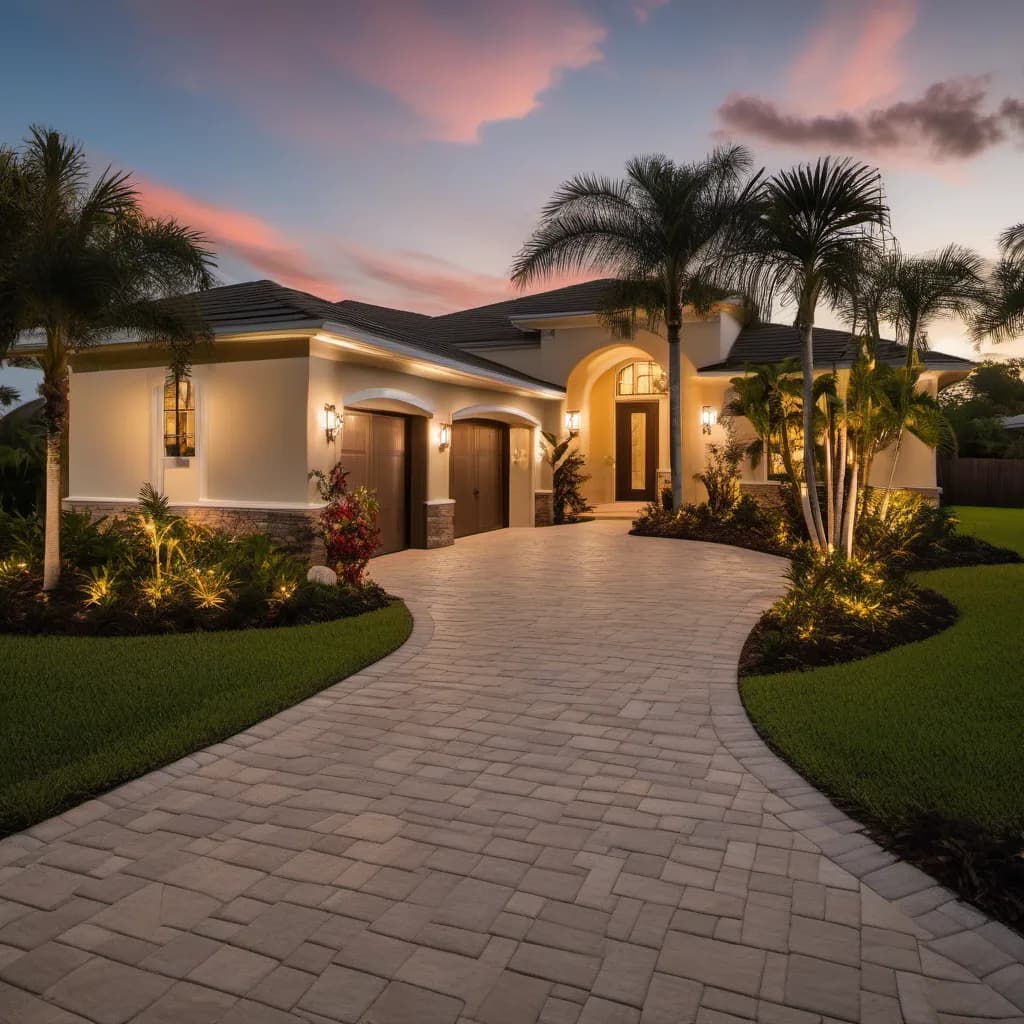
Why Paver Driveways Outperform Concrete in Cape Coral
Poured concrete driveways are still common in Cape Coral, but they're a suboptimal choice for Florida's climate. Here's why:
Cracking is inevitable. Florida's intense heat causes concrete to expand and contract constantly. Over time, this thermal movement creates cracks that are difficult to repair cleanly. Poured concrete driveways in Cape Coral typically develop visible cracks within 5-10 years.
Standing water and drainage issues. Cape Coral's flat terrain and summer downpours mean driveways need to manage water effectively. A poured slab with poor drainage traps water; properly installed pavers allow water to filter between joints and drain away.
Repairs are ugly. When poured concrete cracks or a section fails, the patch never truly matches the original. With pavers, individual units can be removed and replaced - repairs are nearly invisible.
Pavers simply look better. A well-designed paver driveway dramatically improves curb appeal and property value. In Cape Coral's competitive real estate market, this matters.
Types of Pavers for Cape Coral Driveways
Concrete Pavers
The most popular choice for Cape Coral driveways. Manufactured in consistent dimensions and available in an enormous range of colors, textures, and patterns. Affordable, durable, and proven in Florida's climate. Most residential paver driveways in Cape Coral use concrete pavers.
Best patterns for driveways:
- Herringbone (45° or 90°): The strongest pattern - the interlocking arrangement distributes vehicle weight across multiple pavers and resists shifting better than any other layout. Ideal for driveways.
- Running bond: Clean, modern look. Good for straight driveways.
- Basketweave: Classic look, common in traditional-style homes.
Travertine Pavers
Natural stone quarried in Turkey and other limestone-rich regions. Beautiful, distinctive look with natural color variation. Stays cooler underfoot than concrete - relevant for driveways in direct Florida sun. Higher material cost than concrete pavers but exceptional aesthetic results.
Brick Pavers
Traditional, time-tested, and extremely durable. Clay brick pavers actually get stronger with age and can last 50-100 years with proper maintenance. Excellent for traditional and colonial-style homes common in some Cape Coral neighborhoods.
Porcelain Pavers
Modern, large-format option for contemporary home designs. Non-porous and stain-resistant. Less common for driveways than patios due to cost and the need for precise installation, but stunning when done right.
The Driveway Paver Installation Process
Step 1: Demolition and Removal
If an existing concrete or asphalt driveway is being replaced, it's broken up and removed. This is a significant portion of the project cost and labor. Concrete demolition debris must be properly disposed of.
Step 2: Excavation and Grading
The driveway area is excavated to the correct depth - typically 8-12 inches for a vehicle-bearing driveway. The grade is established to ensure water drains away from the home and toward the street or designated drainage areas.
Step 3: Compacted Base Layer
A thick layer of compacted gravel base (typically road base or crushed concrete) is installed and compacted in lifts. This base layer is the most important structural component of the driveway - it prevents settling and keeps the surface stable under vehicle loads for decades. Cutting corners on base depth is the most common cause of paver driveway failure.
For driveways (which carry vehicle weight), the base should be at least 6 inches compacted - more for heavier vehicles or areas with soft soil.
Step 4: Sand Bedding Layer
A 1-inch layer of coarse concrete sand is screeded perfectly level over the compacted base. Pavers sit on this layer and it allows minor adjustments during installation.
Step 5: Paver Installation
Pavers are laid by hand in the chosen pattern, starting from a straight reference line. Any cuts for edges, curves, or angles around garage openings are made with a masonry saw. Spacers maintain consistent joint width.
Step 6: Edge Restraints
Plastic or aluminum edge restraints are spiked into the base along all perimeter edges to prevent pavers from spreading outward over time. Edge restraints are essential for long-term stability.
Step 7: Polymeric Sand and Sealing
Polymeric sand is swept into all joints and activated with water - it hardens to prevent weed growth and ant tunneling while remaining flexible. A penetrating sealer is applied to protect the surface, enhance color, and simplify future cleaning.
Driveway Paver Cost in Cape Coral
Costs depend on driveway size, paver type, existing conditions, and design complexity:
- Concrete pavers, single-car width (apx. 400 sq ft): $6,000-$12,000
- Concrete pavers, double-car width (apx. 700-900 sq ft): $10,000-$20,000
- Travertine pavers, double width: $18,000-$35,000
- Large circular or decorative feature driveways: $25,000-$60,000+
These ranges include demolition of existing concrete (if applicable), excavation, base preparation, and full installation with sealing. Projects without existing concrete to remove cost less.
Driveway Pavers and Cape Coral Property Value
A well-installed paver driveway consistently delivers strong ROI in Cape Coral's real estate market. First impressions matter enormously in a market where buyers compare properties heavily on curb appeal. Real estate agents in SW Florida regularly cite driveways as one of the most visible upgrades that influences buyer perception.
Blue Collar Q installs paver driveways across Cape Coral with free 3D renders so you can see exactly how your finished driveway will look before installation begins.
Call (239) 799-5594 or visit bluecollarq.net for a free driveway paver estimate.
Get a free quote
Name and phone is all we need. Serving Cape Coral, Fort Myers and all of SW Florida.