Travertine Overlay Over Existing Concrete: The No-Demo Pool Deck Upgrade
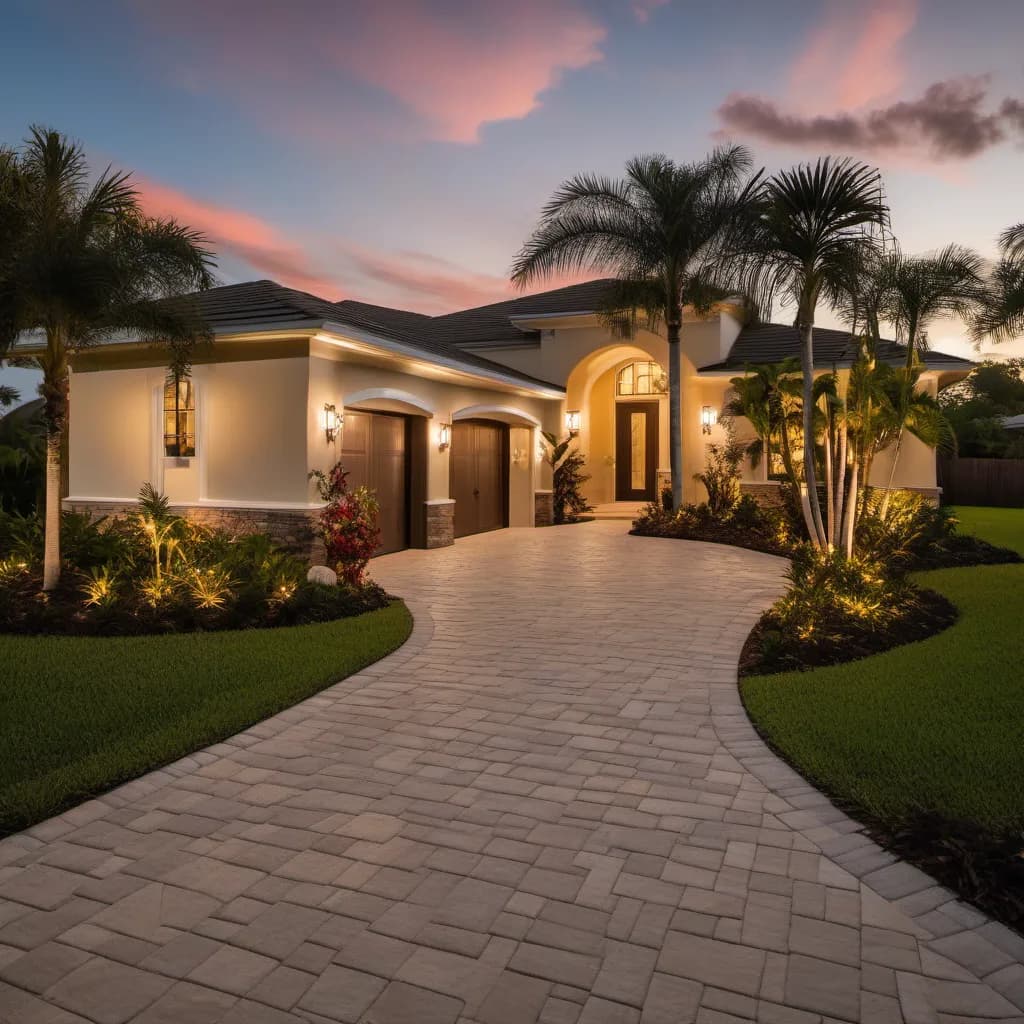
The most expensive part of many pool deck remodels isn't the new surface - it's demolishing the old one. Jackhammering a concrete deck, hauling the rubble, and rebuilding a compacted base is real money before a single new stone goes down. Which is why the best-kept secret in SW Florida hardscape is that a structurally sound concrete deck doesn't need to come out: travertine can be set directly over it.
How an Overlay Works
Your existing slab becomes the base. We clean and prep the concrete, then set travertine over it - the slab provides the structure, the stone provides the surface. Because the concrete already handled decades of settling, an overlay on a sound slab is arguably more stable than new stone on new base. The deck gains roughly an inch-plus of height, transitions get re-worked at the coping and thresholds, and the finished product is indistinguishable from a ground-up travertine deck.
The Cost Math
The overlay's pitch is everything it skips. At our published rates, a ground-up travertine deck includes removal at +$1 per square foot plus full excavation and base build. An overlay skips the demolition line and the base work entirely: the same $8/sq ft workmanship rate plus the stone itemized at $4-$7/sq ft by grade.
Worked example: a 600 sq ft existing concrete pool deck, overlaid in mid-grade tumbled travertine, runs roughly 600 × ($8 + $5) ≈ $7,800 - versus roughly $9,000+ for tear-out and ground-up rebuild of the same deck. On bigger decks the gap widens.
When the Overlay Works
- The slab is structurally sound. Hairline surface cracks are fine; slabs crack cosmetically and stop. What matters is that the slab isn't moving.
- The slope is right. Water has to shed away from the pool and the house. A slab with correct pitch passes that virtue straight up into the new stone.
- There's height headroom. The added thickness has to work with door thresholds, pool coping, step heights, and screen-cage tracks. Most decks have the room; we measure every transition before quoting.
- Drainage has somewhere to go. Deck drains and weep paths get maintained or re-worked, not buried.
When It's a Mistake
An overlay locks in whatever's underneath. If the slab has active structural cracks - edges that don't line up, sections that rock, cracks that keep growing - the movement will telegraph through and crack the stone above it. If the deck pitches toward the pool or the house, new stone on top preserves the bad drainage forever. And if the height math doesn't work at the thresholds, forcing it creates trip steps and water intrusion paths.
In those cases, honest answer: demo it and build from base. It costs more and it's the only version that lasts. We tell you which situation you're in during the property walk - before anyone quotes anything.
Overlay vs. Full Rebuild vs. Pavers
If the overlay question has you comparing surfaces more broadly, the travertine vs pavers comparison covers heat, cost, and maintenance head-to-head, and the travertine service page has the full grade-by-grade cost breakdown with worked examples. Concrete pavers can also overlay a sound slab in some configurations - worth asking about if budget is the driver; the paver rates page has that math.
The Inspection Is the Job
Anyone can lay stone on concrete. The judgment call - sound slab or moving slab, workable heights or trip-step factory - is what you're actually hiring. We check the slab, the slope, and every transition, then put the verdict and the number in writing.
Got a tired concrete deck? Call (239) 799-5594 or request a free quote - we'll tell you in one visit whether it's an overlay candidate or a rebuild, with published-rate math for both.
Get a free paver quote
Name and phone is all we need. Serving Cape Coral, Fort Myers and all of SW Florida.