Travertine vs Pavers in Florida: The Honest Comparison
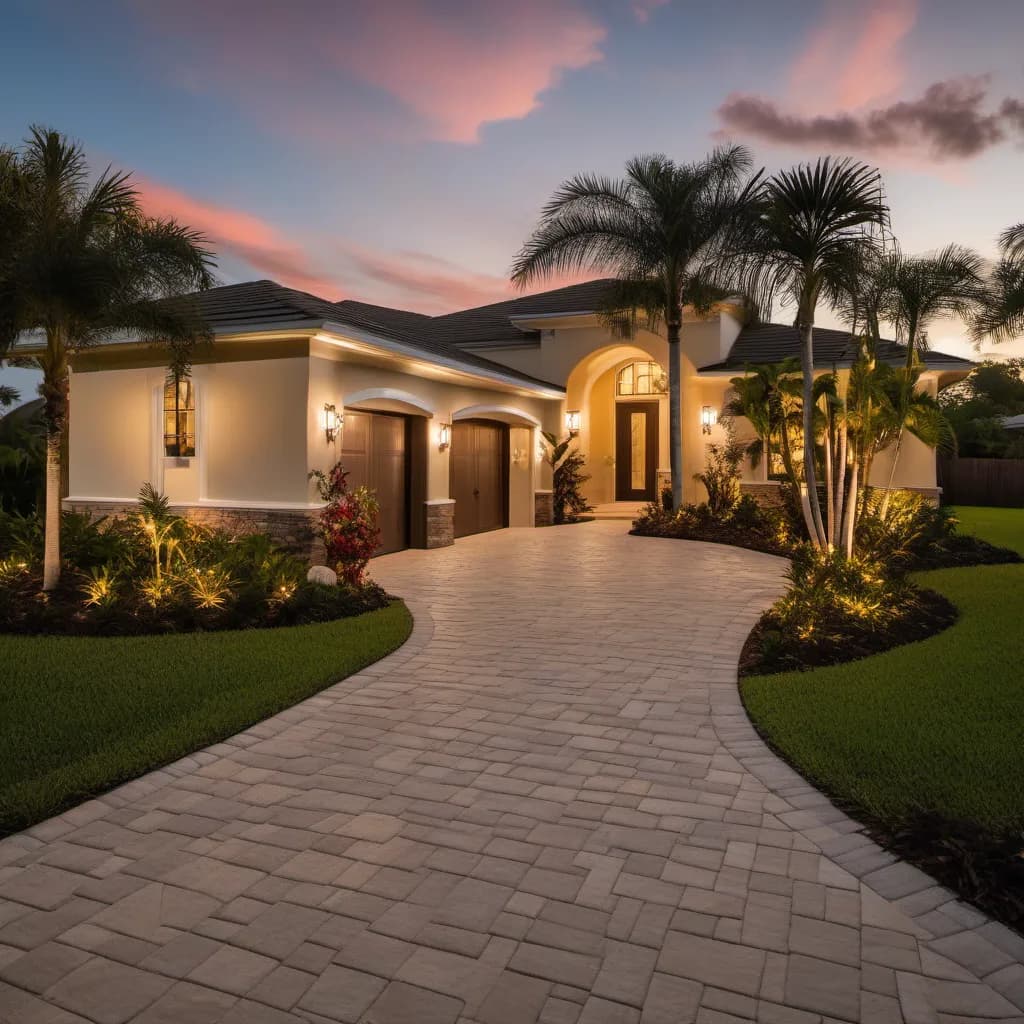
We install both. Same crew, same base prep, same published workmanship rate - so we have no dog in this fight beyond putting the right surface on your project. Here's the travertine-vs-pavers decision the way we'd walk a friend through it, judged for Florida conditions specifically.
The Heat Test (Travertine Wins, Clearly)
This is the argument that settles most pool decks. Light-colored travertine reflects heat and holds less of it than dense concrete pavers - the barefoot difference on a July afternoon is real, not marketing. Ivory and silver travertine stay crossable when a charcoal paver deck is genuinely painful. If bare feet and summer sun meet on this surface regularly, travertine earns its price premium on this single point.
Two honest caveats: nothing stays truly cold in full August sun, and a light-colored concrete paver beats a dark one by a wide margin too. If pavers fit the budget better, going pale gets you most of the way.
The Cost Math (Pavers Win)
At our published rates the comparison is transparent. Concrete pavers run $8 per square foot installed ($9 for complex patterns, +$1 to remove an old surface). Travertine runs the same $8-$9 workmanship rate plus the stone itemized at $4-$7 per square foot by grade - so most travertine decks land $12-$16 per square foot installed all-in.
On an 800 sq ft pool deck, that's roughly $6,400 in pavers versus about $11,600 in French-pattern travertine. Whether the heat, look, and resale story is worth ~$5,000 is a real question only you can answer - but at least here it's a visible number, not a mystery premium.
Durability & Repairs (Closer Than You'd Think)
Both are unit systems over a compacted base, which is the whole reason they beat poured slabs in SW Florida's shifting sandy fill: when settling happens, individual units lift and reset instead of jackhammer-and-repour. Concrete pavers are harder to chip and shrug off vehicle loads, which is why driveways are still paver territory - travertine on a driveway is possible but needs thicker stone and a bigger budget for a surface cars will stain anyway.
Travertine is a natural limestone: it can chip at edges under hard impacts, and acid is its enemy - harsh acidic cleaners etch it. In exchange it never fades, because the color is the stone, not a pigment. Pavers' surface pigments soften over a decade of Florida UV.
Salt, Pools & Canal Lots (Both Fine, Different Care)
Saltwater pool splash-out and coastal salt drift are livable for both surfaces. Travertine handles salt exposure well - it's on pool decks all over Cape Coral's canal grid - but appreciates a penetrating sealer for stain protection and pH-neutral cleaning. Pavers want joint sand maintenance and periodic sealing to keep color and hold the joints; our paver sealing cost guide covers what that maintenance actually runs.
Maintenance & Mold (Tie, With Different Chores)
Everything grows mold in a Florida summer. Travertine's matte, slightly porous surface cleans up with gentle washing and resists the slick algae film that makes smooth surfaces treacherous; tumbled travertine is genuinely one of the most slip-conscious pool surrounds available. Pavers rinse clean easily but their joint sand washes out over years of downpours and needs topping up or re-sanding at resealing time.
Resale & Looks (Travertine, If the House Matches)
In the $500k+ SW Florida market, travertine reads as the expected finish on a pool deck - appraisers and buyers register it. On a modest home, immaculate pavers beat stretched-budget travertine every time. Pavers also offer far more color and pattern control, which matters for driveways and modern designs; travertine's palette is nature's, take it or leave it.
The Short Version
- Pool deck, budget allows: travertine - the heat and resale case is real
- Pool deck, budget tight: light-colored pavers, sealed - 80% of the benefit
- Driveway: concrete pavers, not close
- Covered lanai or entry: either; honed travertine is the premium look
- Already have a sound concrete deck: read the travertine overlay guide - skipping demo changes the math
Deciding on a real project? Call (239) 799-5594 or get a free quote - we'll bring samples of both, quote both at published rates, and tell you which one we'd put on our own house.
Get a free paver quote
Name and phone is all we need. Serving Cape Coral, Fort Myers and all of SW Florida.