Japanese Blueberry Trees, Delivered and Planted in SW Florida
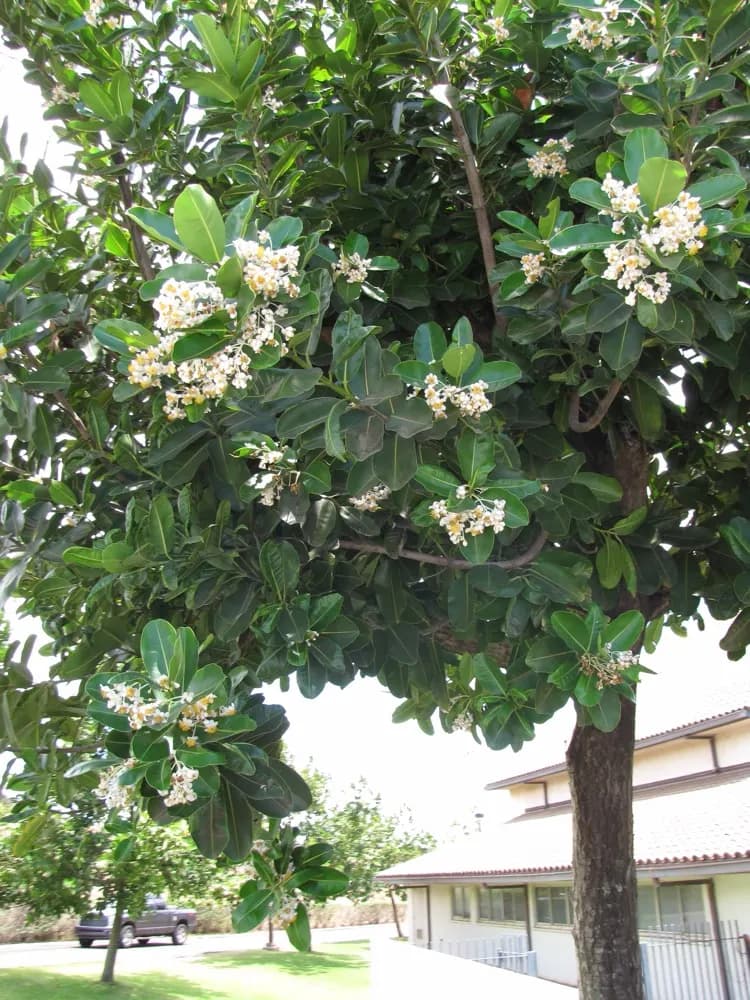
For a tall evergreen screen that takes Southwest Florida's sun and sandy ground, Japanese blueberry tree is a solid pick. It is grown for its glossy leaves and the red and pink ones that appear year-round, not for fruit. It wants full sun and good drainage, and in our often alkaline soil it can turn yellow unless it gets iron and minor nutrients. It also works as a tidy lawn tree.
- Light:
- Full sun to part shade
- Water:
- Moderate; keep young trees moist, established trees handle short dry spells
- Salt:
- Low to moderate; keep it back from direct salt spray
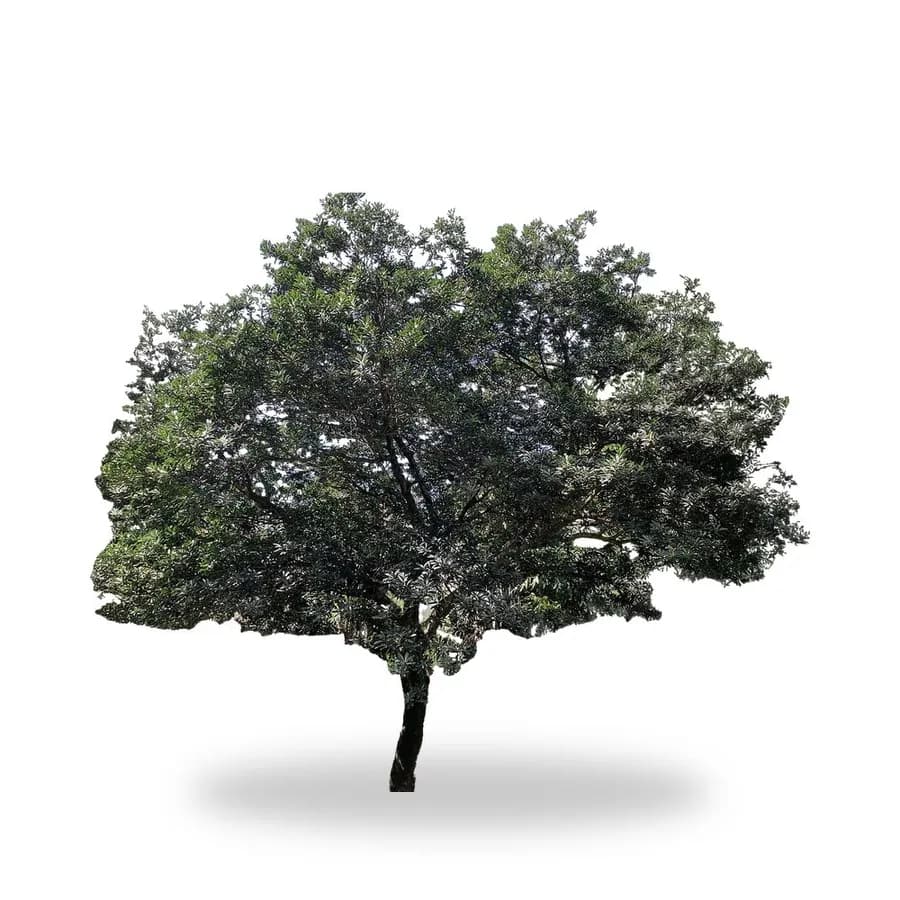
Japanese Blueberry Tree sizes we deliver and plant
Every size below is planted by our crew, set at the right depth and watered in. Send the size and how many, and we text back a planted price, usually within the hour during the day.
| Plant | Sizes |
|---|---|
| Japanese Blueberry Tree | 25 Gallon |
Japanese Blueberry Tree in SW Florida, at a glance
- Mature size here
- 30 to 40 ft tall and 15 to 25 ft wide if left alone; easily held at 10 to 20 ft as a screen
- Light
- Full sun to part shade
- Water
- Moderate; keep young trees moist, established trees handle short dry spells
- Salt tolerance
- Low to moderate; keep it back from direct salt spray
- Cold tolerance
- Very hardy; SW Florida freezes will not hurt it
- Growth rate
- Moderate
- Spacing
- 5 to 8 ft on center for a screen
- Florida native
- No
- Botanical name
- Elaeocarpus decipiens
Where Japanese Blueberry Tree works in a SW Florida yard
Use it where you need height and year-round green. A row at 5 to 8 ft spacing builds a screen 15 to 25 ft tall, and a single tree makes a neat oval shade tree at the corner of a yard. Older leaves turn red and pink before they drop, so there is always a little color mixed into the green.
Plant it away from walks and patios, since the small blue berries can drop and stain. Sabal palm, firebush and coontie make good companions.
- Tall evergreen screen
- Lawn specimen tree
- Colorful foliage accent
- Property-line buffer
How our crew plants it
Keep the top of the 25 gallon root ball slightly above the surrounding grade so water drains away from the trunk, and dig the hole two to three times as wide, but no deeper. Backfill with native soil, mulch 3 inches deep and pull the mulch back from the trunk.
Larger trees get staked until the roots anchor. The crew sets it at the right depth, waters it in and cleans up, and new plantings can take extra water under Lee and Collier rules before dropping to your assigned two days.
Care after planting
- Check new growth in the rainy season, and if leaves come in pale with green veins, treat for iron or manganese shortage with a chelated micronutrient product.
- Fertilize in early spring and again in fall with a slow-release product that includes micronutrients, since nitrogen and phosphorus are banned June 1 to September 30.
- Water young trees deeply instead of often, then back off to your assigned two days once they are established.
- Prune screens lightly and often to hold the height you want, rather than cutting hard once a year.
- Expect a few red leaves to drop in spring and now and then through the year, which is normal.
What to watch for
- High-pH soil causes chlorosis, with yellow leaves and green veins, and it is a common reason this tree declines in alkaline sand.
- Sap-feeding insects such as scale and aphids can leave sticky honeydew and black sooty mold on the leaves.
- It does not like wet feet, so skip low spots that stay flooded after summer rain.
Japanese Blueberry Tree questions we hear
How tall does a Japanese blueberry tree get in Florida?+
Left alone, it can reach 30 to 40 ft tall and 15 to 25 ft wide. As a screen it is usually kept at 10 to 20 ft with light, regular trimming. Growth is moderate, so it will not shoot up overnight, and it keeps an upright, oval shape.
Does Japanese blueberry tree make fruit you can eat?+
It is not grown for fruit. The small blue berries are not a crop, and they can stain walkways and patios. The tree is planted for its glossy evergreen leaves and the red ones that show up through the year. For fruit you can eat, a citrus or mango tree is the better pick.
Will Japanese blueberry tree grow in alkaline soil?+
It grows, but expect yellowing. UF/IFAS notes the tree tends to turn chlorotic in high-pH soil, which shows as pale leaves with green veins. Chelated iron and a micronutrient fertilizer help, though they may not fix it fully. On very alkaline lots, clusia or podocarpus is an easier screen.
How far apart do you plant Japanese blueberry trees for privacy?+
Set 25 gallon trees 5 to 8 ft apart on center. Closer spacing gives privacy sooner but means more trimming, while wider spacing leaves gaps for a few years. Keep the row at least 6 to 8 ft from a wall or fence so the trees have room to fill out.
Is Japanese blueberry tree salt tolerant?+
Only moderately at best. It handles a back yard with an occasional salty breeze, but it is not a plant for beachfront or open-water lots taking direct spray. Where salt is heavy, sea grape, green buttonwood or Jamaican caper are better choices.
Why are the leaves on my Japanese blueberry tree turning red?+
That is normal. Older leaves turn bright red or pink before they drop, a few at a time through the year and more in spring. It is only a concern if new growth turns yellow or the canopy thins, which points to nutrient, watering or drainage problems.
Updated October 2026
Get a planted price on Japanese Blueberry Tree
Tell us what and how many. Quinten prices it from the nursery's live list and texts you back, usually within the hour during the day.
Only need the plant delivered, no planting? It is on our nursery's list at Palm & Plant Co.
Also worth a look
More like this
All shade trees
The service
Tree and shrub installation
Planning a whole yard
See it in 3D first
We deliver and plant across Cape Coral, Fort Myers, Naples, Estero, Bonita Springs and about an hour around.