Sabal Palms, Delivered and Planted in SW Florida
Sabal palm, also called cabbage palm, is Florida's state tree and one of the toughest palms you can plant in Southwest Florida. It tolerates salt, wind, heat, drought and seasonal flooding, and it is best as a tall natural-looking specimen, a row along a drive, or a coastal anchor. We deliver and plant field-grown sabals in the sizes shown on this page.
- Light:
- Full sun to part shade; best in full sun
- Water:
- Moderate while new; drought tolerant once established, and it handles seasonal flooding
- Salt:
- High; one of the best palms for coastal and canal lots
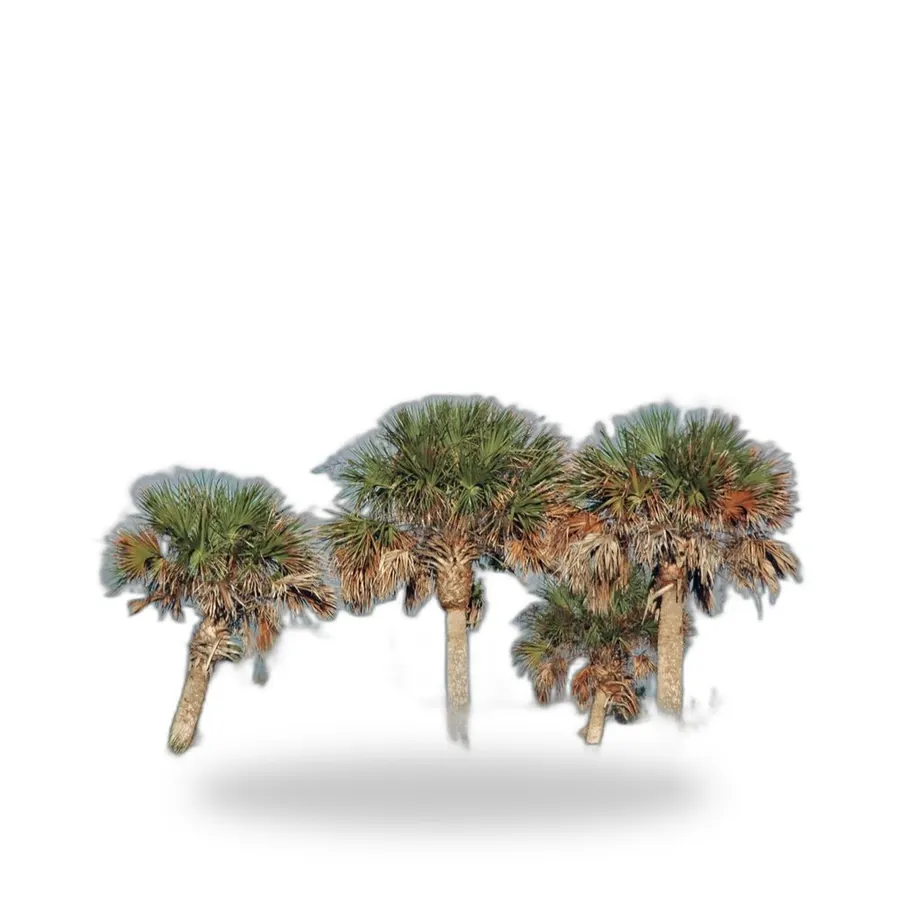
Sabal Palm sizes we deliver and plant
Every size below is planted by our crew, set at the right depth and watered in. Send the size and how many, and we text back a planted price, usually within the hour during the day.
| Plant | Sizes |
|---|---|
| Sabal Palm | Field Grown 10', Field Grown 14' |
Sabal Palm in SW Florida, at a glance
- Mature size here
- 40 to 60 ft tall, with a rounded crown 10 to 15 ft wide
- Light
- Full sun to part shade; best in full sun
- Water
- Moderate while new; drought tolerant once established, and it handles seasonal flooding
- Salt tolerance
- High; one of the best palms for coastal and canal lots
- Cold tolerance
- Very hardy into the teens°F, so SW Florida cold is no concern
- Growth rate
- Slow to moderate
- Spacing
- 12 to 15 ft on center in a row
- Florida native
- Yes, Florida's state tree
- Botanical name
- Sabal palmetto
Where Sabal Palm works in a SW Florida yard
Sabal palms read as old Florida, and they look best in a straight row along a drive or property line, or in groups of three set at staggered heights. Keep them 10 to 15 ft from the house, pool cage and power lines, because the crown spreads wide and the trunk keeps thickening.
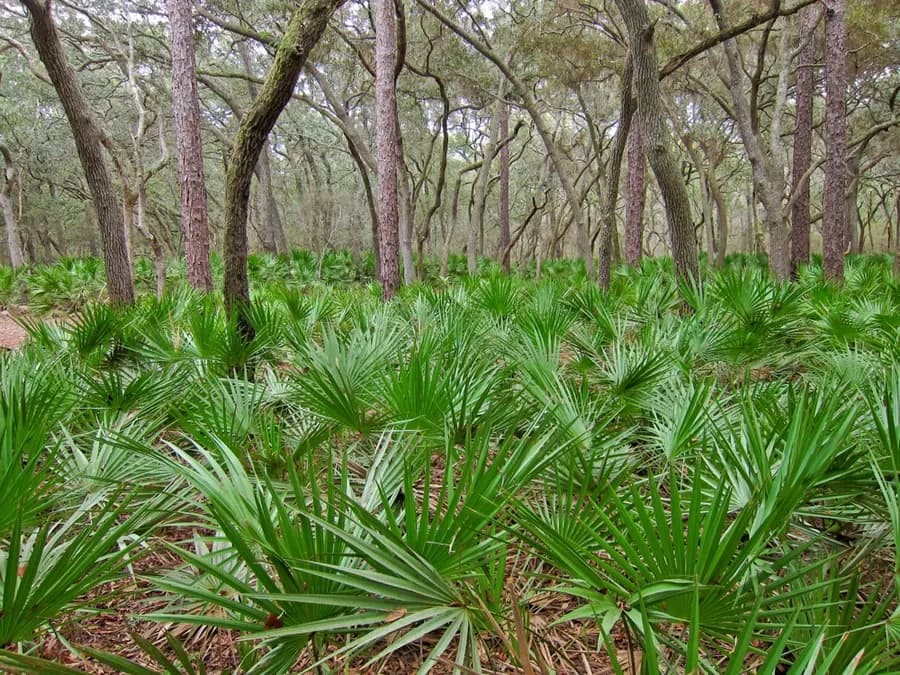
They suit canal lots and coastal yards where lesser palms struggle. Saw palmetto, coontie and muhly grass at the base give a layered native look.
- Tall native specimen
- Row along a driveway
- Coastal and canal-lot anchor
- Hurricane-tough accent
- Staggered groups of three
How our crew plants it
A field-grown sabal goes in a hole at least twice as wide as the root ball and no deeper, with the top of the ball at the soil surface. Backfill with native soil, settle it with water, and brace the trunk with three or four padded stakes for 6 to 12 months while new roots grow.
Water in deeply, then keep the root ball moist daily at first and taper over several weeks, using the extra watering Lee and Collier allow on new plantings. We deliver and set the palm, brace it, water it in, and clean up.
Care after planting
- Prune only dead, brown fronds and spent flower stalks, because cutting green fronds, the so-called hurricane cut, weakens the palm and invites weevils.
- Feed with a slow-release palm fertilizer, about 8-2-12 with micronutrients, in spring and early fall to head off potassium, magnesium and manganese deficiency, and skip it June 1 to September 30 under the Lee County, Naples and Marco Island ban.
- Keep the root ball moist for the first several weeks and water deeply through the first dry season; after that sabals manage on rainfall plus your two assigned days.
- Keep mulch 3 inches deep in a wide ring, and keep both mulch and soil off the trunk.
What to watch for
- Ganoderma butt rot, a soil fungus with no cure, is a leading killer of mature palms in Florida, sabals included, so shelf-like conks on the lower trunk or a wilting, declining crown mean calling a pro and not replanting a palm in the same spot.
- A stressed, newly transplanted or heavily pruned sabal can attract palmetto weevils, so keep it watered and prune only dead fronds.
Sabal Palm questions we hear
Is sabal palm hurricane resistant?+
Yes. Sabal palm is one of the best palms for hurricane winds, because the trunk flexes rather than snapping and the roots hold well once established. New plantings need bracing for the first 6 to 12 months, and a hacked-up crown from heavy pruning is more vulnerable than a full one.
What is the difference between sabal palm and cabbage palm?+
They are the same palm. Sabal palmetto goes by sabal palm, cabbage palm and palmetto, and it is Florida's state tree. Do not confuse it with saw palmetto, a low, shrubby native palm that grows from the ground in clumps.
When is the best time to plant a sabal palm in Southwest Florida?+
Warm months are easiest, because palms root fastest in warm soil and the summer rains help. Late spring through early fall is ideal. You can plant in cooler months if you water consistently. In any season, brace the trunk and keep the root ball moist for the first several weeks.
How far from the house should I plant a sabal palm?+
Plant a sabal at least 10 to 15 ft from the house, pool cage and overhead lines. The crown spreads 10 to 15 ft and the trunk keeps thickening, and old fronds drop as it ages. In a row, space sabals 12 to 15 ft apart.
How fast does a sabal palm grow?+
Slowly to moderately, and slower in the first year while the roots re-establish. That is why field-grown sizes are popular: you get trunk height now instead of waiting years. Once settled, regular palm fertilizer and water in the dry season keep growth steady.
How much does it cost to plant a sabal palm?+
Price depends on size, form and how many, so we text a planted price instead of listing one. Field-grown sabals vary a lot by height, so tell us the size and the number you want. We usually reply within the hour during the day, and half down holds the palms and a delivery day.
Updated October 2026
Get a planted price on Sabal Palm
Tell us what and how many. Quinten prices it from the nursery's live list and texts you back, usually within the hour during the day.
Only need the plant delivered, no planting? It is on our nursery's list at Palm & Plant Co.
Also worth a look
More like this
All palm trees
The service
Palm tree installation
Planning a whole yard
See it in 3D first
We deliver and plant across Cape Coral, Fort Myers, Naples, Estero, Bonita Springs and about an hour around.