Hurricane Landscape Prep Checklist for SW Florida Homes (2026)
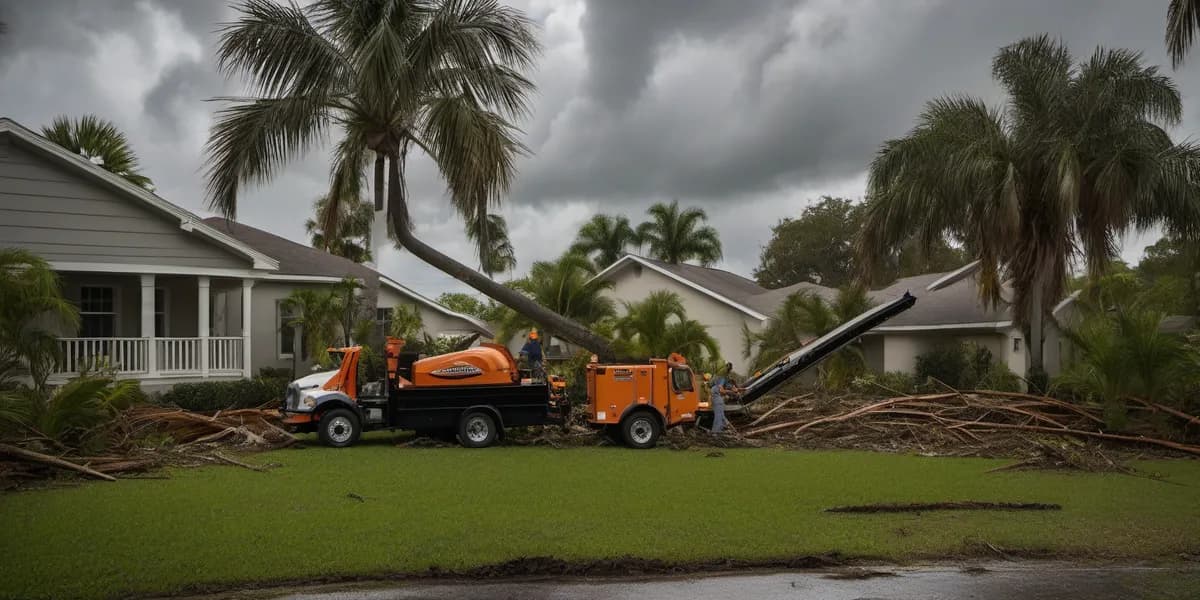
Hurricane season runs June through November, and the yards that come through SW Florida storms cheapest are prepped in phases - not in a panicked weekend when a cone shows up on the forecast. Here's the checklist we run on our own properties in Cape Coral, including the palm science that most tree crews still get wrong.
Start of Season (June): The Big Structural Work
Prune trees for structure, not for looks. The goal is reducing what the wind can grab and removing what's already failing: dead limbs, cracked branches, rubbing crossovers, and over-dense canopy that catches wind like a sail. Good pruning thins so wind passes through. Two things disqualify a tree crew instantly: "topping" (cutting the main trunk back to stubs) and "lion-tailing" (stripping inner branches so all the weight sits at the branch tips). Both make trees more likely to fail in wind, not less.
Do NOT hurricane-cut your palms. This is the one the industry keeps getting wrong. University of Florida/IFAS research is unambiguous: palms are natural wind survivors, and green fronds are both their food supply and physical protection for the bud - the palm's only growing point. Stripping a palm to a feather-duster of three fronds ("hurricane cut") starves and weakens it, and over-trimmed palms lose their living fronds in wind more easily, not less. The correct prep: remove only fully dead, brown fronds - and get the coconuts and heavy seed pods down, because those genuinely are projectiles. If a trimmer proposes taking green fronds "for the storm," send them home.
Check your young trees. Anything planted in the last 18 months should be properly staked - stakes loose enough to let the trunk flex (that flexing builds anchoring roots), tight enough to stop the root ball from rocking. And check planting depth while you're there: trees planted too deep, with the root flare buried, are the ones that lever out of the ground whole.
Walk your drainage before the water arrives. Clear the swale, make sure downspouts and gutters discharge somewhere useful, and fix the low spot that ponded last summer - a yard that's already saturated when the storm arrives gives tree roots nothing to hold. If a corner of the lot never dries out, our Cape Coral French drain guide covers what works in our soil and what doesn't.
Mid-Season Maintenance (July-August)
- Keep palms maintained on the dead-fronds-and-seed-pods rule - small regular trims beat one drastic cut every time.
- Photograph the whole property, dated, from multiple angles. If you ever file a claim, the before pictures are worth more than any receipt.
- Keep an inventory list of everything that will need to come inside: potted plants, patio furniture, umbrellas, grills, decor. When a watch is issued you want a checklist, not a scavenger hunt.
- Confirm your irrigation controller has a working rain sensor - required on Florida systems for a reason.
Storm Watch (72 Hours Out)
Stop cutting. This is counterintuitive and critical: 72 hours out is too late to prune anything. Debris collection stops before the storm, and a tidy pile of cut branches at the curb becomes a crate of missiles in 100 mph wind. If it isn't already trimmed, secured, or hauled, the window has closed - work the list you can finish:
- Bring in every pot, cushion, umbrella, and piece of furniture on the inventory list
- Anchor what can't come in; lay tall potted plants on their sides against a wall
- Shut irrigation off at the controller
- Take one final dated set of photos
After the Storm
Safety first: treat every downed line as live, and leave anything leaning on a structure or entangled with wires to people with the equipment for it.
Then resist the urge to over-cut. Palms that look rough but kept their buds usually push new fronds within months - give them a season before condemning them. Small uprooted trees stood back up, replanted at correct depth, and staked within a day or two often survive. On canal lots, rinse salt spray off foliage with fresh water as soon as it's practical. And when the chainsaw crews knock on the door offering to "clean up everything green," remember that half of what's brown is coming back.
For what recovery looks like from the first cut through full replanting - including realistic cleanup costs and the insurance paperwork - see our hurricane cleanup and landscape restoration service and the full SW Florida hurricane cleanup guide.
Want the June Work Done Right?
We handle pre-season structural pruning, correct palm maintenance, staking, and drainage fixes across Cape Coral, Fort Myers, and SW Florida - see trees and shrubs services - and after a storm we're the local crew that stays for the restoration, not just the chainsaw week.
Call (239) 799-5594 or request a free quote to get the pre-season work scheduled before the first cone shows up.
Get a free quote
Name and phone is all we need. Serving Cape Coral, Fort Myers and all of SW Florida.