Oyster Plant and Moses-in-the-Cradle, Delivered and Planted
Low, purple-backed and easy, oyster plant (also called Moses-in-the-cradle) grows in sun or shade across Southwest Florida, but it spreads by offsets and seed, and UF/IFAS rates it invasive in South Florida. Use it in a contained bed or pot. It comes in 1 gallon, in a standard form and a compact dwarf, delivered and planted by our crew.
- Light:
- Part sun to shade; full afternoon sun can scorch leaves in summer
- Water:
- Low to moderate; drought tolerant once established
- Salt:
- Not well documented; keep out of direct salt spray
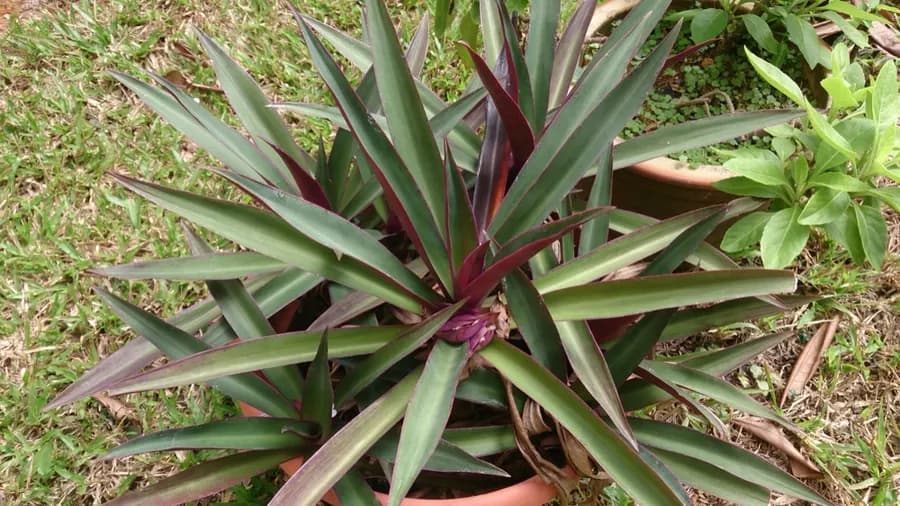
Oyster Plant (Moses-in-the-Cradle) sizes we deliver and plant
Every size below is planted by our crew, set at the right depth and watered in. Send the size and how many, and we text back a planted price, usually within the hour during the day.
| Variety or form | Sizes | Good to know |
|---|---|---|
| Oyster Dwarf | 1 Gallon | A compact dwarf form in 1 gallon that stays low, which suits tight borders, pots and small beds. |
| Moses in Cradle (Rhoeo) | 1 Gallon | The standard taller form in 1 gallon, with sword-shaped leaves and the small boat-like bracts that give it its common name. |
Oyster Plant (Moses-in-the-Cradle) in SW Florida, at a glance
- Mature size here
- 12 to 18 in tall and 1 to 2 ft wide; the dwarf stays lower
- Light
- Part sun to shade; full afternoon sun can scorch leaves in summer
- Water
- Low to moderate; drought tolerant once established
- Salt tolerance
- Not well documented; keep out of direct salt spray
- Cold tolerance
- Frost burns the leaves, and the clump usually resprouts from the base
- Growth rate
- Moderate; spreads by offsets and seed
- Spacing
- 12 to 18 in apart
- Florida native
- No
- Botanical name
- Tradescantia spathacea (Rhoeo spathacea)
Where Oyster Plant (Moses-in-the-Cradle) works in a SW Florida yard
Oyster plant is a groundcover for edges and understory, with sword-shaped leaves that are green on top and purple underneath. Use it as a border in a bed with a hard edge, under palms and trees where grass quits, or in pots.
It pairs with ti plant, bromeliads and ferns. Hold it in with pavers or a mow strip, and keep it away from preserves, canal banks and natural areas.
- Contained bed edging
- Shady groundcover under trees
- Pots and planters
- Purple-leaf contrast
How our crew plants it
Plant at the same depth as the pot, 12 to 18 inches apart, in holes sized to the pot. Backfill with native soil and water in. Mulch lightly between plants. After a few weeks of the extra watering that Lee and Collier allow on new plantings, rainfall and your assigned days are enough.
Edge the bed and pull any offsets that stray past it.
Care after planting
- Edge the bed and pull offsets that wander before they root, and bag the pulled plants for the trash instead of composting them.
- Give it bright, filtered light so the purple underside stays rich; too little light fades the leaves toward green.
- Trim ragged leaves after a frost.
- Water in long dry spells and skip overhead irrigation that keeps the foliage wet.
What to watch for
- UF/IFAS rates oyster plant invasive in South Florida and FLEPPC lists it as Category II, since it escapes into natural areas by seed and offsets, so we keep it to contained beds and pots away from preserves and canals, and suggest native coontie for lots that border natural land.
- Fungus, root rot and leaf spot show up with too much irrigation, and caterpillars and mites can chew the leaves.
Oyster Plant (Moses-in-the-Cradle) questions we hear
Is oyster plant invasive in Florida?+
Yes, in South Florida. UF/IFAS rates it invasive, and FLEPPC lists it as Category II. It spreads by offsets and seed and can escape into natural areas. Keep it in contained beds or pots away from preserves, canals and wetlands, pull strays, and choose native coontie if your lot borders natural land.
Does oyster plant grow in full sun?+
It takes sun but does best in part sun to shade. In full Southwest Florida sun the leaf tips can scorch, while deep shade fades the purple underside toward green. Morning sun with afternoon shade gives the best color, and it is drought tolerant once established.
How far apart should I plant oyster plants?+
Plant 12 to 18 inches apart for a solid cover in a season or two. The standard form needs the wider spacing, and the dwarf can go a little closer. Set an edge or paver border to hold the clumps, since they spread by offsets.
Updated October 2026
Get a planted price on Oyster Plant (Moses-in-the-Cradle)
Tell us what and how many. Quinten prices it from the nursery's live list and texts you back, usually within the hour during the day.
Only need the plant delivered, no planting? It is on our nursery's list at Palm & Plant Co.
Also worth a look
More like this
All ground covers & vines
The service
Landscape installation
Planning a whole yard
See it in 3D first
We deliver and plant across Cape Coral, Fort Myers, Naples, Estero, Bonita Springs and about an hour around.