Satakentia Palms, Delivered and Planted in SW Florida
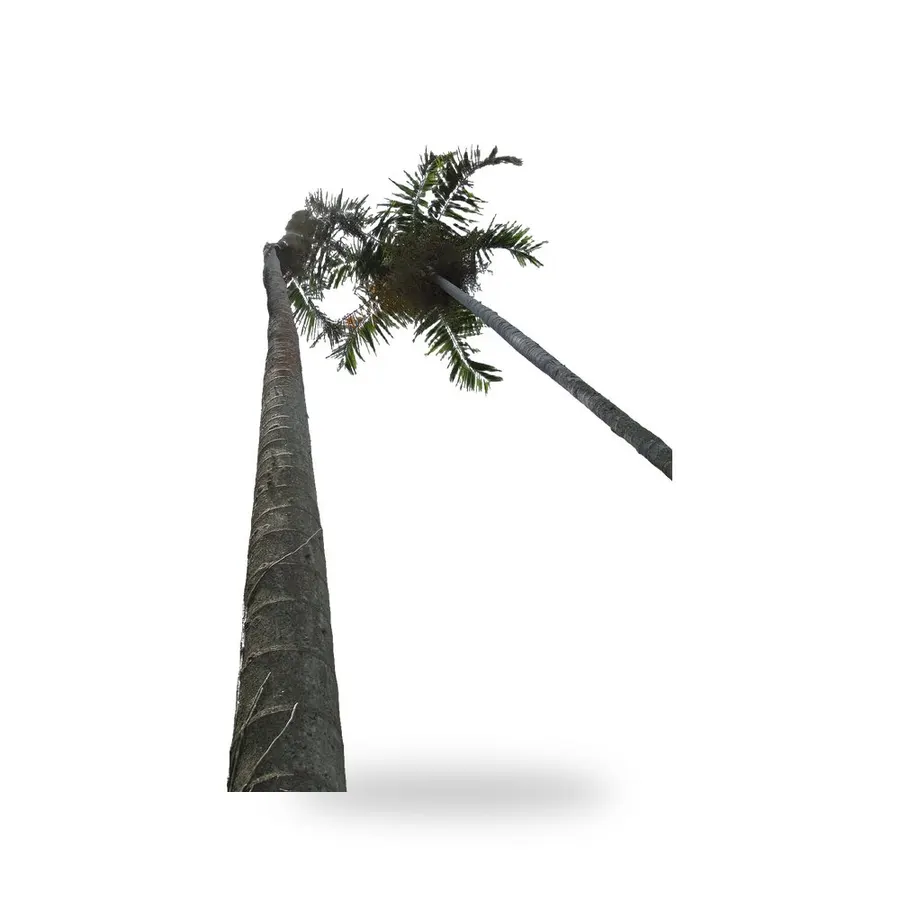
Satakentia, the Satake palm, is a single-trunk feather palm that does well in SW Florida in full sun with regular water, and it works best as a focal palm near an entry, pool or lanai. It has a smooth, deep green crownshaft and arching fronds, but it is cold tender. We deliver and plant single trunks and field-grown double and quad sets.
- Light:
- Full sun to part shade
- Water:
- Regular; keep evenly moist with good drainage
- Salt:
- Low to moderate; give it shelter from direct salt spray
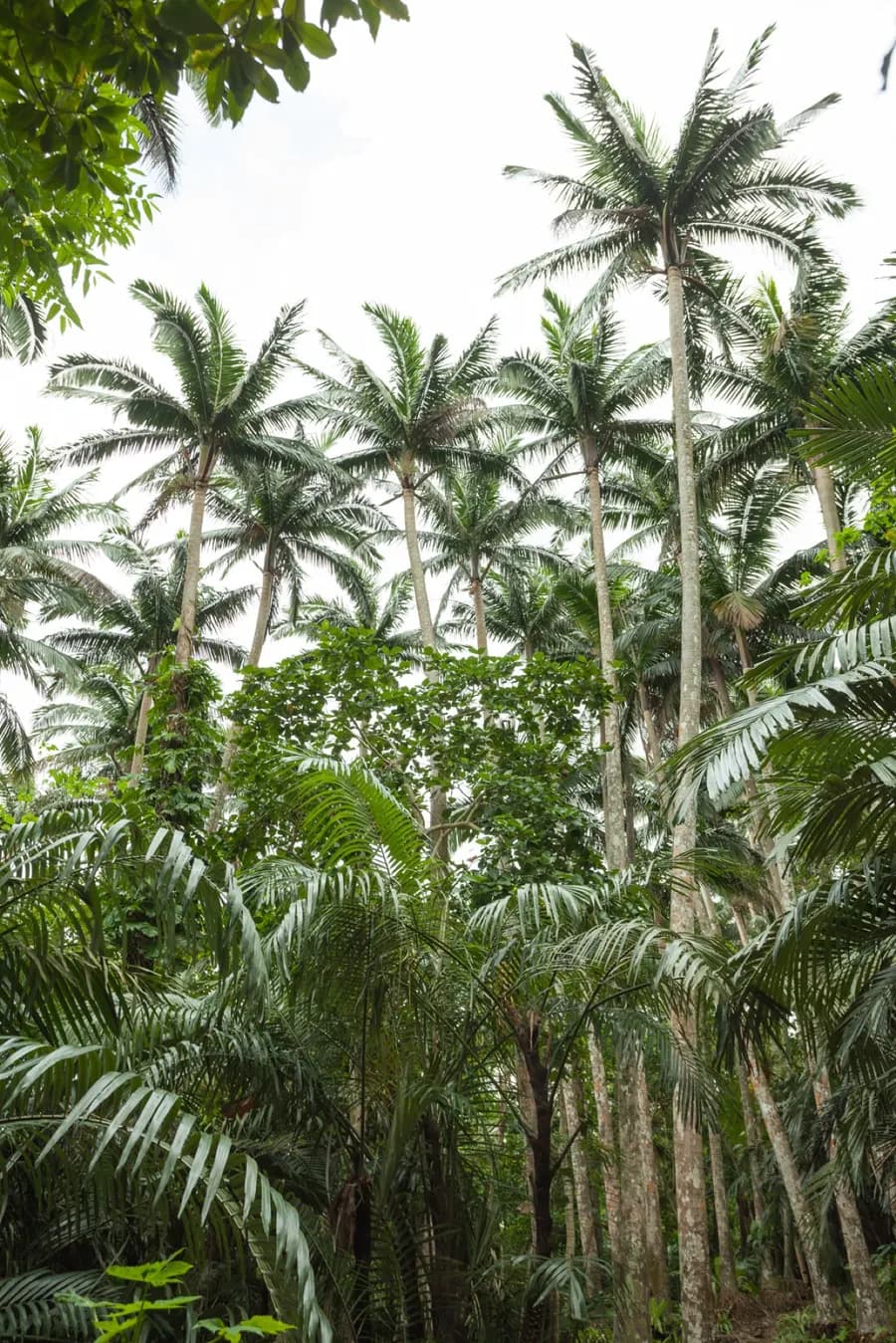
Satakentia Palm sizes we deliver and plant
Every size below is planted by our crew, set at the right depth and watered in. Send the size and how many, and we text back a planted price, usually within the hour during the day.
| Plant | Sizes |
|---|---|
| Satakentia Palm | Single Trunk, Starter, Single Trunk, Large, Field Grown, Double-Trunk Set, Field Grown, Quad-Trunk Set |
Satakentia Palm in SW Florida, at a glance
- Mature size here
- Around 25 to 40 ft tall eventually
- Light
- Full sun to part shade
- Water
- Regular; keep evenly moist with good drainage
- Salt tolerance
- Low to moderate; give it shelter from direct salt spray
- Cold tolerance
- Tender. Fronds begin to burn near freezing, so use a protected spot and cover young palms on frost nights
- Growth rate
- Moderate
- Florida native
- No, native to Japan's Ryukyu Islands
- Botanical name
- Satakentia liukiuensis
Where Satakentia Palm works in a SW Florida yard
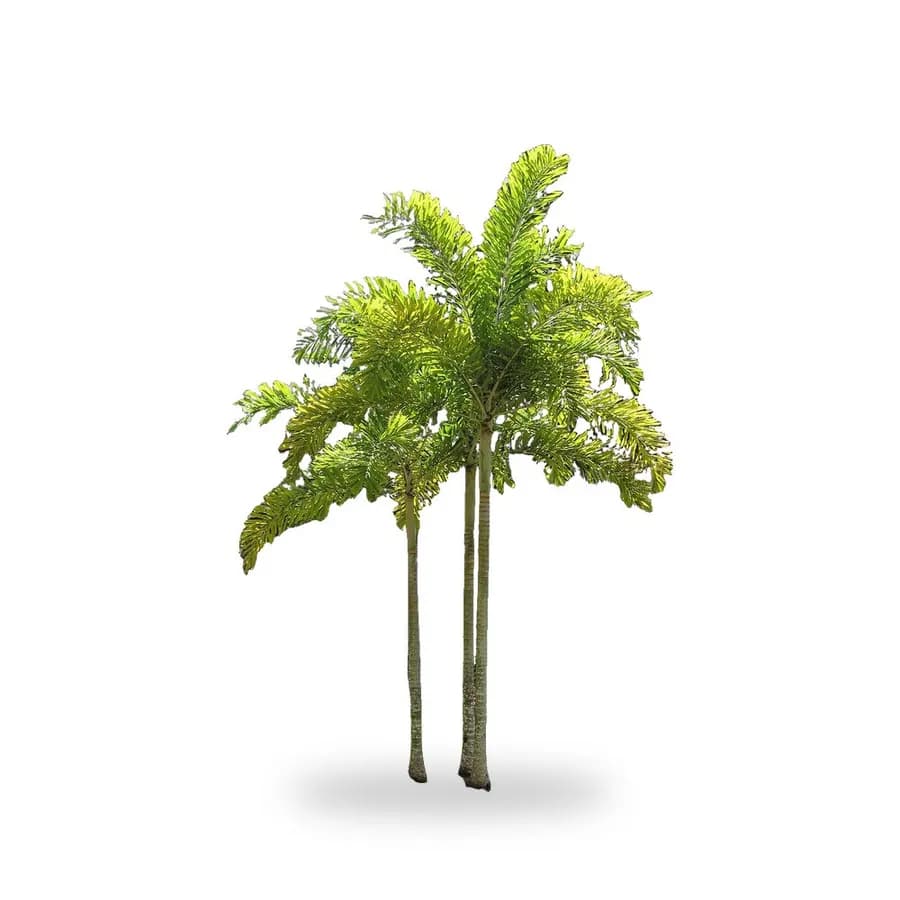
Use Satakentia as a statement: at an entry court, beside a pool, or as a double or quad set at a lanai corner where the staggered trunks read as a small grove. The smooth crownshaft shows best against a plain wall or a simple lawn. Ti plants, bromeliads and a mondo grass edge keep the base tidy without competing.
- Specimen focal palm
- Entry and pool accent
- Multi-trunk clusters
- Resort-style plantings
How our crew plants it
Set Satakentia in a hole two to three times as wide as the root ball and no deeper, with the top of the ball at soil level, and brace it for six to twelve months.
Multi-trunk sets go in as one unit, trunks clear of mulch. We water in and clean up. Lee and Collier allow extra watering on new plantings.
Care after planting
- Feed with an 8-2-12 palm fertilizer with magnesium and micronutrients in spring and fall, and use nothing containing nitrogen or phosphorus from June 1 to September 30.
- Keep the root zone evenly moist, especially in the dry season, with mulch kept off the trunk.
- Cover young palms with frost cloth on freeze nights, and wait for warm weather to remove burned fronds.
- Cut only fronds that are dead or hanging.
Satakentia Palm questions we hear
Is Satakentia palm cold hardy in Florida?+
It is cold tender. Fronds begin to burn near freezing, and a hard freeze can set back or kill a young palm. Coastal Lee and Collier are the easier sites, and inland areas like Lehigh Acres need a sheltered spot and frost cloth on freeze nights.
How big does a Satake palm get?+
Over time it reaches roughly 25 to 40 feet as a single-trunk palm with a smooth crownshaft. Growth is moderate, helped by full sun, steady water and a palm fertilizer with micronutrients. That is smaller than a royal palm, so it suits most residential lots.
What are Satakentia double and quad trunk sets?+
They are field-grown sets with two or four palms growing together in one root ball, with trunks staggered for a fuller, grove-like look. Single trunks come in starter and large sizes. Sets plant as one unit and need a little more room than a single palm.
Updated October 2026
Get a planted price on Satakentia Palm
Tell us what and how many. Quinten prices it from the nursery's live list and texts you back, usually within the hour during the day.
Only need the plant delivered, no planting? It is on our nursery's list at Palm & Plant Co.
Also worth a look
More like this
All palm trees
The service
Palm tree installation
Planning a whole yard
See it in 3D first
We deliver and plant across Cape Coral, Fort Myers, Naples, Estero, Bonita Springs and about an hour around.