Snake Plants, Delivered and Planted in SW Florida
Snake plant is a tough, upright, sword-leaved plant that takes heat, drought, shade and neglect in SW Florida beds and pots. It is best as a bold accent in dry, awkward spots. One caution: UF/IFAS rates it a high invasion risk in Florida and it spreads by rhizomes, so we plant it in contained beds and pots. We deliver and plant 3 gallon plants.
- Light:
- Part sun to shade; full sun is fine once acclimated
- Water:
- Low; let the soil dry between waterings
- Salt:
- Low to moderate; best away from direct salt spray
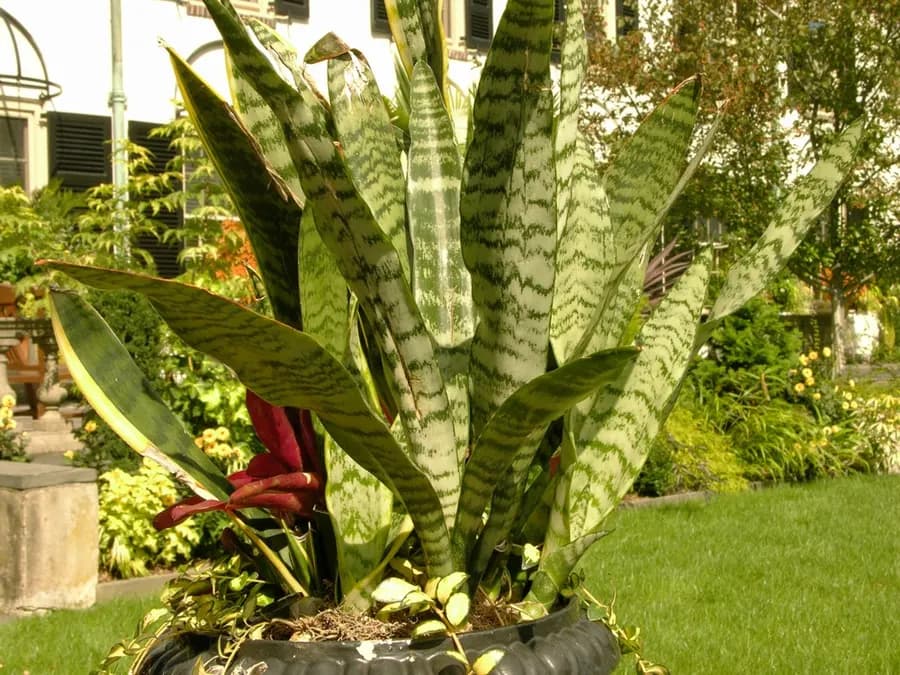
Snake Plant sizes we deliver and plant
Every size below is planted by our crew, set at the right depth and watered in. Send the size and how many, and we text back a planted price, usually within the hour during the day.
| Plant | Sizes |
|---|---|
| Snake Plant | 3 Gallon |
Snake Plant in SW Florida, at a glance
- Mature size here
- 2 to 4 ft tall; the clump widens steadily by rhizomes
- Light
- Part sun to shade; full sun is fine once acclimated
- Water
- Low; let the soil dry between waterings
- Salt tolerance
- Low to moderate; best away from direct salt spray
- Cold tolerance
- Frost-tender. Leaves collapse near freezing and the plant resprouts from the rhizomes in spring if the soil stayed unfrozen; cold, wet soil rots it
- Growth rate
- Slow to moderate, fastest in summer
- Spacing
- 18 to 24 in apart for a mass planting
- Florida native
- No, native to West Africa
- Botanical name
- Dracaena trifasciata (formerly Sansevieria trifasciata)
Where Snake Plant works in a SW Florida yard
Snake plant belongs where little else lives: hot west walls, dry courtyard beds, raised planters and big pots on the lanai or at the entry. Its vertical leaves give a clean contrast to soft, rounded plants. Because it spreads by rhizomes, edge the bed with a hard barrier or keep it in containers.
Aloe, bromeliads and a mondo grass edge match its low-water habits and keep the whole planting looking intentional.
- Dry-bed architectural accent
- Pots and planters
- Low-water borders
- Shady problem spots
How our crew plants it
Choose a spot with sharp drainage and set snake plant at the same depth it sits in the pot, 18 to 24 inches apart for a mass. Our crew plants it, waters it in and cleans up. Lee and Collier allow extra watering on new plantings, but snake plant rots when kept wet, so water in well and taper off fast.
Use edging, a planter or a root barrier to hold the rhizomes where you want them.
Care after planting
- Water only when the soil has dried, and plant it where the bed drains quickly in the summer rains.
- Feed lightly once or twice a year, outside the June 1 to September 30 nitrogen and phosphorus ban in Lee County, Naples and Marco Island.
- Cover or move potted plants on frost nights, then cut frost-burned leaves to the base once the cold has passed.
- Divide crowded clumps and bag the pieces instead of dumping them, because every piece of rhizome can root.
What to watch for
- UF/IFAS rates snake plant a high invasion risk, predicted invasive and not recommended, with plants found growing wild in Lee and Collier among other counties, so we plant it only in pots, edged beds and courtyards and suggest coontie, a Florida native, beside natural areas.
- The ASPCA lists snake plant as mildly toxic to dogs and cats, and chewing the leaves can cause drooling, vomiting and diarrhea.
- Soggy or cold, wet soil turns the base mushy, so the leaves flop and fall over.
Snake Plant questions we hear
Is snake plant invasive in Florida?+
UF/IFAS rates it a high invasion risk in Florida and does not recommend it, and it has been found growing wild in Lee and Collier counties among others. It spreads by rhizomes and any discarded piece can root. If you grow it, keep it in pots or edged beds and bag trimmings and divisions rather than dumping them.
Can snake plants live outside in Florida year-round?+
Yes, in SW Florida they handle the heat and the dry season well outdoors. The risks are frost, which collapses the leaves, and wet soil in the rainy season, which rots the base. Plant in sharp drainage and cover or move potted plants when a freeze is forecast.
Does a snake plant need sun or shade outside?+
It adapts to anything from part sun to shade. A plant already used to sun can take full sun, but one moved straight from shade into hot afternoon sun can scorch or bleach. Give it a few weeks to adjust, or choose a spot with morning sun and afternoon shade.
Is snake plant poisonous to dogs and cats?+
Mildly. The ASPCA lists it as toxic to dogs and cats, and chewing the leaves can cause drooling, vomiting and diarrhea. It is not usually dangerous, but keep pots out of reach of pets that chew plants, and call your vet if one eats a lot.
How often should I water an outdoor snake plant?+
Rain does most of the work once it is rooted in. In the dry season, a deep soak every week or two is plenty, and nothing at all if the soil is still damp. New plantings can have extra water under Lee and Collier rules, but snake plant prefers less.
How much does it cost to have snake plants installed?+
Price depends on how many plants you need, the pot size and how much bed prep or edging the spot needs. We text a planted price, usually within the hour during the day. Half down holds the plants and a delivery day.
Updated October 2026
Get a planted price on Snake Plant
Tell us what and how many. Quinten prices it from the nursery's live list and texts you back, usually within the hour during the day.
Only need the plant delivered, no planting? It is on our nursery's list at Palm & Plant Co.
Also worth a look
More like this
All tropical plants
The service
Landscape installation
Planning a whole yard
See it in 3D first
We deliver and plant across Cape Coral, Fort Myers, Naples, Estero, Bonita Springs and about an hour around.