Traveler Palms, Delivered and Planted in SW Florida
Not a true palm, traveler palm is a bold, fan-shaped member of the bird of paradise family that grows well in Southwest Florida's heat and rain. Huge paddle leaves form a flat, symmetrical fan on a plant that reaches 20 to 30 ft, so it is best as a single dramatic focal plant with plenty of room around it.
- Light:
- Full sun; tolerates part shade
- Water:
- Moderate to high; keep evenly moist, especially for the first two years
- Salt:
- Low to moderate; salt wind shreds and scorches the big leaves
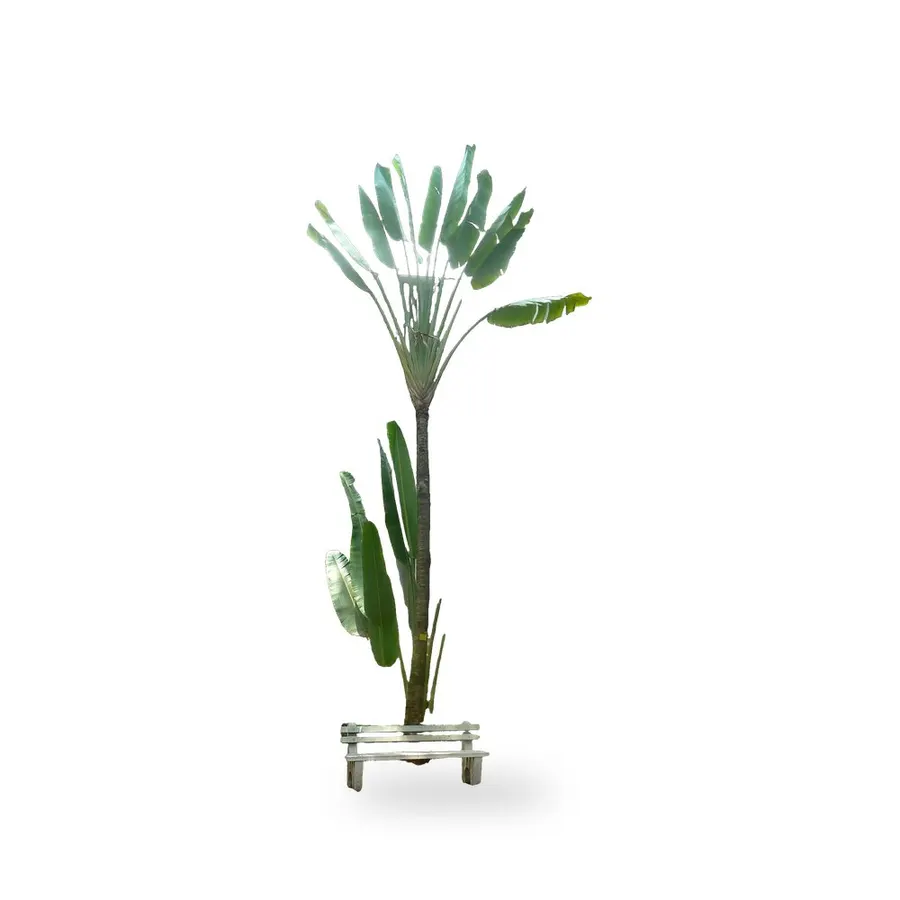
Traveler Palm sizes we deliver and plant
Every size below is planted by our crew, set at the right depth and watered in. Send the size and how many, and we text back a planted price, usually within the hour during the day.
| Plant | Sizes |
|---|---|
| Traveler Palm | 7 Gallon, 15 Gallon, 55 Gallon, 25 Gallon, Field Grown 12'-17' |
Traveler Palm in SW Florida, at a glance
- Mature size here
- 20 to 30 ft tall with a flat fan 10 to 15 ft wide
- Light
- Full sun; tolerates part shade
- Water
- Moderate to high; keep evenly moist, especially for the first two years
- Salt tolerance
- Low to moderate; salt wind shreds and scorches the big leaves
- Cold tolerance
- Leaves burn near freezing and a hard freeze can kill it back; coastal Lee and Collier is usually fine, but protect young plants inland on frost nights
- Growth rate
- Moderate to fast
- Spacing
- 10 to 15 ft from the house, pool and other plants; 12 to 15 ft apart in a row
- Florida native
- No, native to Madagascar
- Botanical name
- Ravenala madagascariensis
Where Traveler Palm works in a SW Florida yard
A traveler palm needs room, because the fan is flat and can spread 10 to 15 ft across. Plant it as a single focal point at the corner of a large bed or lawn, with the flat face turned toward the street or patio so the fan reads from the front.
It looks best with a wall or lower shrubs behind it rather than crowded on all sides. Pair it with bromeliads, ginger and white bird of paradise for a layered tropical bed. Skip tight side yards and spots right against the house.
- Dramatic focal plant
- Large tropical beds
- Corner and courtyard anchor
- Backdrop for tropical gardens
How our crew plants it
Pick the spot first, because a traveler palm is hard to move once its fan is wide. We set the plant so the top of the root ball sits level with the soil, rotate it so the fan faces your main view, and backfill with native sand and a little compost.
Taller plants, from the 55 gallon up to field-grown, get braced for the first year. We water in deeply and keep the root zone moist, using the extra watering Lee and Collier allow on new plantings.
Care after planting
- Water regularly, since this plant wants even moisture and the big leaves brown quickly in a dry spell.
- Feed three times a year with a slow-release palm fertilizer such as 8-2-12 with micronutrients, and skip the June 1 to September 30 fertilizer ban in Lee County, Naples and Marco Island.
- Trim torn or browned leaves at the base to keep the fan tidy, and remove suckers if you want a single clean stem.
- Cover young plants with frost cloth on nights forecast near freezing, particularly inland.
- Mulch the root zone two to three inches deep to hold moisture in our sandy soil.
What to watch for
- The huge leaves shred in strong wind and look ragged after a storm, and tall plants with a wide fan can topple in a hurricane if the roots are not well anchored, so brace new plantings and choose a spot with some wind shelter.
Traveler Palm questions we hear
Is a traveler's palm really a palm?+
No. Despite the name, it belongs to the bird of paradise family, not the palm family. That is why its leaves are big paddles in a flat fan rather than palm fronds. It is landscaped like a palm and likes similar care, but its biology is closer to a banana or a bird of paradise.
How big does a traveler palm get in Florida?+
Plan on 20 to 30 ft tall with a flat fan 10 to 15 ft wide. Growth is moderate to fast with heat, water and feeding. It also suckers from the base over time, so a single plant can become a clump. Leave plenty of room from the house, pool and neighbors.
Will wind or a hurricane destroy a traveler palm?+
Strong wind shreds the big leaves, so a traveler palm looks rough after a storm. Tall plants with a wide fan are also top-heavy and can topple if the roots are not well anchored. Brace new plantings for the first year and pick a spot with some wind shelter. If the roots hold, new leaves follow.
Can traveler palms survive a freeze in Cape Coral or Lehigh Acres?+
Traveler palms are tropical, and leaves burn near freezing. A hard freeze can kill the plant back hard or outright. Cape Coral and coastal Lee usually stay warm enough. Inland spots like Lehigh Acres and North Fort Myers can see frost, so cover young plants on cold nights.
How close to the house or pool can I plant a traveler palm?+
Leave 10 to 15 ft from the house, pool and any screen enclosure, because the fan is wide and the leaves tear and drop in wind. Turn the flat side toward the view you want. Giving it space also keeps the fan from rubbing the roofline.
How often should I water a traveler palm?+
Water a traveler palm regularly and keep the root zone evenly moist, especially for the first two years. New plantings get extra watering under Lee and Collier rules, then you follow your assigned watering days. It browns in long dry spells, so mulch and soak deeply when rain is scarce.
Updated October 2026
Get a planted price on Traveler Palm
Tell us what and how many. Quinten prices it from the nursery's live list and texts you back, usually within the hour during the day.
Only need the plant delivered, no planting? It is on our nursery's list at Palm & Plant Co.
Also worth a look

More like this
All palm trees
The service
Palm tree installation
Planning a whole yard
See it in 3D first
We deliver and plant across Cape Coral, Fort Myers, Naples, Estero, Bonita Springs and about an hour around.