Coconut Palms, Delivered and Planted in Southwest Florida
Coconut palm does well along Southwest Florida's coast and canals, handles salt and wind better than most palms, and is best as a tropical focal tree in a sunny, open spot. It is also cold-sensitive and prone to lethal yellowing, so site and care matter. Our crew sets 3 to 5 ft palms and field grown 18 ft palms at the right depth, braces them, and waters them in.
- Light:
- Full sun
- Water:
- Moderate; regular water to establish, drought tolerant once rooted but fruits best with steady moisture
- Salt:
- High; handles salt spray, salty soil and brackish water
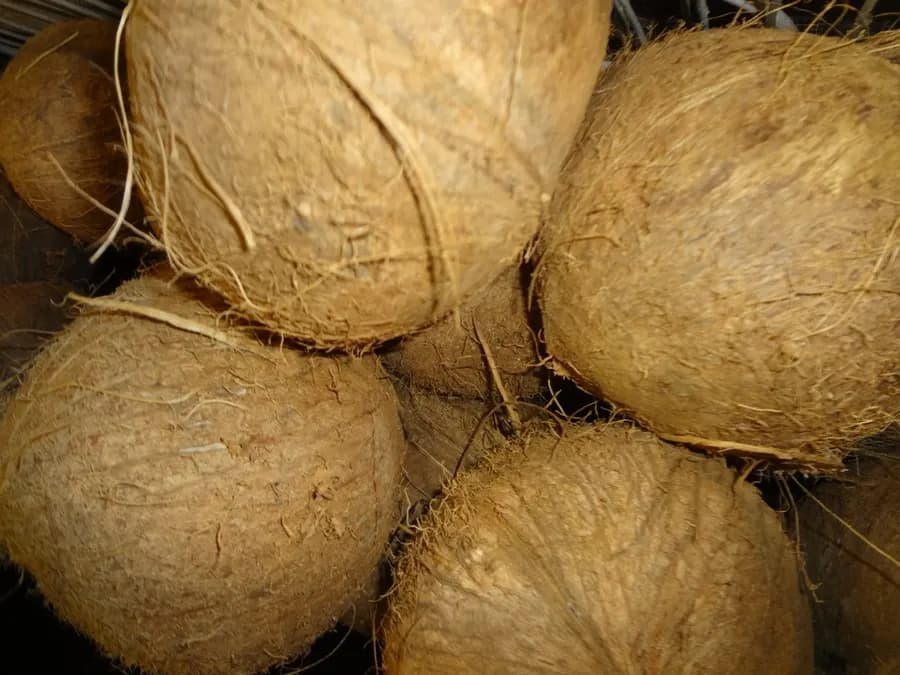
Coconut Palm sizes we deliver and plant
Every size below is planted by our crew, set at the right depth and watered in. Send the size and how many, and we text back a planted price, usually within the hour during the day.
| Plant | Sizes |
|---|---|
| Coconut Palm | 3'-5', Field Grown 18' |
Coconut Palm in SW Florida, at a glance
- Mature size here
- 40 to 60 ft tall in most Florida landscapes (tall types can pass 80 ft over decades), crown 15 to 25 ft wide
- Light
- Full sun
- Water
- Moderate; regular water to establish, drought tolerant once rooted but fruits best with steady moisture
- Salt tolerance
- High; handles salt spray, salty soil and brackish water
- Cold tolerance
- Fronds burn near 32°F and a hard freeze can kill the palm; coastal Lee and Collier usually come through, inland Lehigh Acres and North Fort Myers are riskier
- Growth rate
- Moderate
- Spacing
- 20 ft or more apart in a row; 15 to 20 ft from the house, pool cage and power lines
- Florida native
- No, tropical Pacific origin, naturalized on South Florida shores
- Botanical name
- Cocos nucifera
Where Coconut Palm works in a SW Florida yard
A coconut palm gives a yard the tropical look at once, and it takes salt and wind that damage more tender palms. Give it full sun and open sky, and keep it clear of roofs, pool cages, cars and walkways, because mature palms drop heavy nuts and fronds.
Plant three at different heights in a loose grouping, or set one 18 ft palm as the focal point of a lawn. Orange bird of paradise, ornamental ginger and liriope make easy companions at the base.
- Tropical focal tree
- Sunny open-lawn specimen
- Canal and coastal yards
- Entry or driveway accent
How our crew plants it
Plant at the same level the palm was growing: about 1 inch of stem below the surface for container palms, the previous soil line for field grown palms. Dig two to three times as wide as the root ball, backfill with native sand, and water right away. Brace field grown palms with three or four braces, and mulch 3 to 4 inches deep, off the trunk.
The warm, rainy months are the best planting season. New palms can be watered extra under Lee and Collier rules, so soak every day or two at first, then taper.
Care after planting
- Feed with a palm fertilizer (8-2-12 with micronutrients) in spring and fall, and use only potassium, magnesium and micronutrient products during the June 1 to September 30 nitrogen and phosphorus ban in Lee County, Naples and Marco Island.
- Watch the oldest fronds: yellow-orange spotting means potassium deficiency, broad yellow bands mean magnesium, and frizzled, stunted new fronds point to manganese.
- Cut only fully brown fronds, because yellowing older fronds are still feeding the palm.
- Water new palms deeply through the first year, then about an inch a week from rain or irrigation in the dry months.
- On frost nights, cover young palms; well-fed palms take cold damage far better.
What to watch for
- Lethal yellowing kills coconut palms across Florida: nuts drop early and flower stalks blacken, then fronds yellow from the bottom up, and UF/IFAS says even Malayan Dwarf and Maypan types can get it, so preventive trunk injections of oxytetracycline are the main protection.
- UF/IFAS rates coconut palm invasive in South Florida, approved only for limited uses, and FLEPPC lists it as a Category II invasive, because nuts float and sprout along shorelines and natural areas; we suggest planting it in managed yards, picking up fallen nuts, keeping it away from beaches, mangroves and preserves, and choosing sabal or paurotis palm for natural-edge sites.
- Falling nuts and fronds are heavy, so keep seating, cars and walkways out from under the crown.
Coconut Palm questions we hear
Is coconut palm salt tolerant?+
Yes. Coconut palm is among the most salt-tolerant palms you can plant, handling salt spray, salty soil and brackish water, so it suits canal lots and coastal yards in Cape Coral, Naples and Marco Island. It does not tolerate prolonged flooding, so skip low spots that stay under water after storms.
Can coconut palms survive in Cape Coral and Fort Myers?+
Yes, in most coastal and canal yards; UF/IFAS puts the west coast limit for successful coconut growing at Punta Gorda. The risk is cold: fronds burn near 32°F and a hard freeze can kill a palm. Inland spots like Lehigh Acres and North Fort Myers are riskier, so choose the warmest, most sheltered spot and cover young palms on frost nights.
Will a coconut palm in Florida produce coconuts?+
Yes. Coconut palms flower about 4 to 6 years from seed, start fruiting around 6 to 10 years, and the nuts take about a year to mature. A larger, older palm is already past those early years and often fruits sooner than a small one. Mature nuts are heavy, so plant clear of walkways and parking.
How do coconut palms hold up in a hurricane?+
Generally well. UF/IFAS says coconut palms are quite tolerant of wind and usually survive hurricane-force winds, with loss of fronds and toppling over the most common damage. A palm that goes over and is righted promptly and watered well usually survives, so act quickly rather than writing it off.
How close to the house or pool can I plant a coconut palm?+
Keep it at least 15 to 20 ft from the house, pool cage and power lines, because the crown spreads 15 to 25 ft and mature palms drop fronds and heavy nuts. A small palm looks safe at first but outgrows the spot, so plan around the mature size, not the size on delivery day.
What kills coconut palms in Florida?+
Lethal yellowing is the main killer, followed by freeze damage, nutrient deficiency and, in poorly drained or wounded palms, bud rot and trunk rot. Lethal bronzing also affects coconuts. Early signs are premature nut drop and blackened flower stalks. Regular feeding, avoiding trunk wounds and asking an arborist about preventive injections are the best defenses.
Updated October 2026
Get a planted price on Coconut Palm
Tell us what and how many. Quinten prices it from the nursery's live list and texts you back, usually within the hour during the day.
Only need the plant delivered, no planting? It is on our nursery's list at Palm & Plant Co.
Also worth a look
More like this
All palm trees
The service
Palm tree installation
Planning a whole yard
See it in 3D first
We deliver and plant across Cape Coral, Fort Myers, Naples, Estero, Bonita Springs and about an hour around.