Perennial Peanut, Delivered and Planted in SW Florida
For a sunny strip where grass struggles, perennial peanut is one of the better lawn alternatives in Southwest Florida. It stays low, carries small yellow flowers, handles drought once established, and needs no nitrogen fertilizer because it makes its own. The catch is patience. Plants fill in slowly the first year, so weeds are the main job early on.
- Light:
- Full sun to part shade; flowers and fills in best in sun
- Water:
- Regular for the first few months; drought tolerant once established
- Salt:
- Moderate; handles light salt spray but not salty or flooded soil
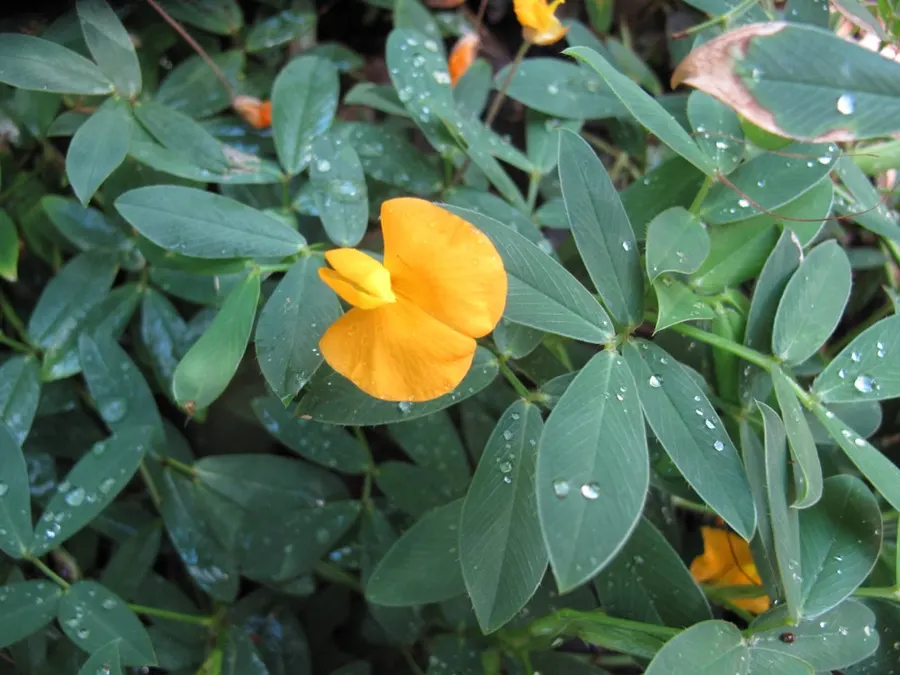
Perennial Peanut sizes we deliver and plant
Every size below is planted by our crew, set at the right depth and watered in. Send the size and how many, and we text back a planted price, usually within the hour during the day.
| Plant | Sizes |
|---|---|
| Perennial Peanut | 1 Gallon |
Perennial Peanut in SW Florida, at a glance
- Mature size here
- 6 to 12 in tall, spreading steadily by underground stems
- Light
- Full sun to part shade; flowers and fills in best in sun
- Water
- Regular for the first few months; drought tolerant once established
- Salt tolerance
- Moderate; handles light salt spray but not salty or flooded soil
- Cold tolerance
- Frost burns the tops and the planting may die back to the ground, then it regrows from the underground stems in spring
- Growth rate
- Slow to establish, then moderate
- Spacing
- 12 to 18 in on center, closer for faster cover
- Florida native
- No, native to South America
- Botanical name
- Arachis glabrata
Where Perennial Peanut works in a SW Florida yard
Perennial peanut works where grass struggles: sunny strips beside the driveway, berms, sloped banks and the open ground under palms and young trees. It stays low, so views stay open. Use it as a mat that sets off taller plants such as firebush, muhly grass or a clump of crinum lily.
It tolerates the occasional footstep but is not a play lawn, so keep a mulched path through high-traffic spots. Edge it where you want a clean line.
- Lawn alternative in sun
- Groundcover under palms
- Slopes and berms
- Driveway and curbside beds
How our crew plants it
Clear existing grass and weeds first, since perennial peanut cannot compete with them while young. We loosen the soil, set each 1 gallon plant at the same depth it grew in the pot, and space plants 12 to 18 in apart in staggered rows.
Water daily at first and taper over several weeks, within the extra watering Lee and Collier allow for new plantings. A thin layer of mulch between plants holds moisture and slows weeds until the runners close the gaps.
Care after planting
- Hand-pull weeds all through the first year, because that is when they can win.
- Skip nitrogen fertilizer, since the plant makes its own nitrogen.
- Mow or trim high once or twice a year, after the last frost risk, to clear old growth and keep the planting dense.
- Water new plantings often for the first month, then only in long dry spells once the roots are down.
What to watch for
- It spreads by underground stems and will creep into lawn and beds without a hard edge, so install edging or keep a mowed buffer.
- Grassy weeds are the main cause of failure while the planting is still thin.
Perennial Peanut questions we hear
Is perennial peanut a good lawn alternative in Florida?+
Yes, in full sun and well-drained ground it is one of the better lawn alternatives. It stays low, needs little water once rooted, and needs no nitrogen fertilizer. It is not a play lawn, and it browns in a frost. Shade and heavy foot traffic are where it struggles.
How far apart do you plant perennial peanut?+
We space plants 12 to 18 in apart in staggered rows. Closer spacing fills in faster and shuts out weeds sooner, while wider spacing uses fewer plants but takes longer to close. Even at the tight end, plan on a year or more before it fully covers the ground.
Does perennial peanut survive frost in Southwest Florida?+
Yes. Frost burns the leaves and the planting can die back to the ground, but it regrows from the underground stems in spring. Coastal Lee and Collier rarely see damage. Inland areas such as Lehigh Acres and North Fort Myers can brown out on cold nights, then green back up as the weather warms.
How fast does perennial peanut spread?+
Slowly at first. Expect the first year to be mostly about building roots, with real spread in year two once the underground stems take off. Warm, sunny, well-watered ground speeds it up, and weeds slow it down. After it closes, it keeps creeping outward and needs an edge.
Does perennial peanut make peanuts you can eat?+
Not in any amount worth harvesting. It is a relative of the peanut, but it is grown as a groundcover for its foliage and yellow flowers. Plant it for the cover it gives the soil, not as a crop.
How much does it cost to install perennial peanut?+
The price comes down to the square footage, the plant spacing and how much clearing the area needs first. Text us the rough size of the space and we reply with a planted price, usually within the hour during the day. Half down holds the plants and a delivery day.
Updated October 2026
Get a planted price on Perennial Peanut
Tell us what and how many. Quinten prices it from the nursery's live list and texts you back, usually within the hour during the day.
Only need the plant delivered, no planting? It is on our nursery's list at Palm & Plant Co.
Also worth a look

More like this
All ground covers & vines
The service
Landscape installation
Planning a whole yard
See it in 3D first
We deliver and plant across Cape Coral, Fort Myers, Naples, Estero, Bonita Springs and about an hour around.