Sand Cordgrass, Delivered and Planted in SW Florida
Wet swale or dry sand, salt spray or none, sand cordgrass takes it. This Florida native clumping grass grows 3 to 5 ft tall and is best for low-maintenance native plantings, retention pond edges and coastal yards. Full sun and a late-winter haircut keep the clumps full and upright.
- Light:
- Full sun
- Water:
- Handles both dry sand and wet, seasonally flooded soil; drought tolerant once established
- Salt:
- Moderate to high; handles salt spray
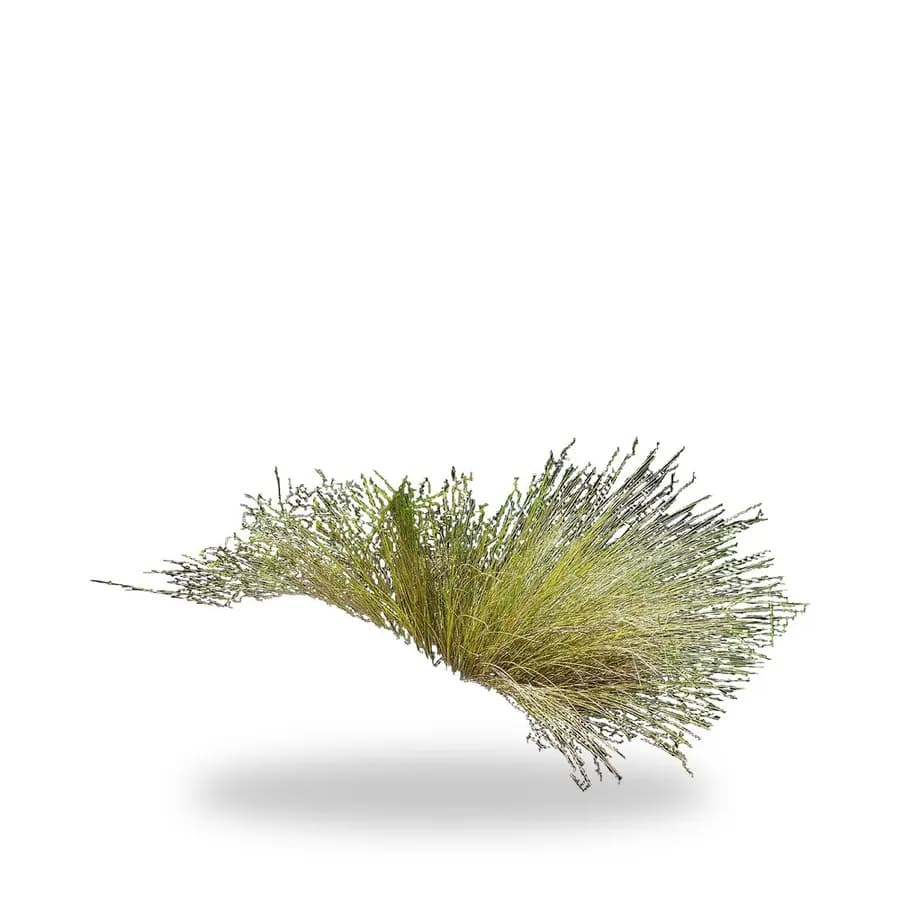
Sand Cordgrass sizes we deliver and plant
Every size below is planted by our crew, set at the right depth and watered in. Send the size and how many, and we text back a planted price, usually within the hour during the day.
| Plant | Sizes |
|---|---|
| Sand Cordgrass | 3 Gallon |
Sand Cordgrass in SW Florida, at a glance
- Mature size here
- 3 to 5 ft tall and 3 to 4 ft wide in a dense clump
- Light
- Full sun
- Water
- Handles both dry sand and wet, seasonally flooded soil; drought tolerant once established
- Salt tolerance
- Moderate to high; handles salt spray
- Cold tolerance
- Very cold hardy; foliage may brown in a frost and the clump regrows from the base
- Growth rate
- Moderate
- Spacing
- 3 to 4 ft on center for a mass planting
- Florida native
- Yes, Florida native
- Botanical name
- Spartina bakeri
Where Sand Cordgrass works in a SW Florida yard
Use sand cordgrass in masses for a soft, wild texture along a swale, a retention pond bank, a canal-side yard or a back edge you do not want to mow. Its fine blades move in the wind and tie in well with muhly grass, coontie and firebush.
For a looser look, plant in irregular groups of three to five. Give each clump about 3 ft of room to fill out.
- Native grass plantings
- Retention pond and swale edges
- Salt-sprayed coastal yards
- Soft, low-water screening
How our crew plants it
Set each 3 gallon clump at the depth it grew in the pot, in a hole twice as wide, spaced 3 to 4 ft apart, then water in well and mulch lightly. In a low or wet spot, plant at the normal grade and let rain do the rest. New plants can be watered extra under Lee and Collier rules.
Care after planting
- Cut the clumps back to 6 to 12 in in late winter, every year or two and before new growth starts, to remove old growth and keep them full.
- Wear gloves and long sleeves when cutting back, since the blades can be sharp-edged.
- Skip fertilizer on established plantings, because this native thrives in poor sandy soil.
- Water new clumps regularly through their first dry season, then leave them to rain and runoff.
Sand Cordgrass questions we hear
Can sand cordgrass grow in both wet and dry areas?+
Yes. Sand cordgrass is native to Florida's sandy flatwoods and marsh edges, and it handles dry sand as well as soil that floods in the rainy season. That makes it useful on swales and retention pond edges that swing between extremes. It is not a plant for deep, permanent water.
How tall does sand cordgrass get, and how far apart do I plant it?+
Expect clumps 3 to 5 ft tall and about 3 to 4 ft wide. Plant clumps 3 to 4 ft apart for a mass that fills in over a couple of seasons. Growth is moderate, and the clumps get fuller each year.
When should I cut back sand cordgrass?+
Cut it back in late winter, before spring growth starts, to about 6 to 12 in. That clears the old, brown growth and keeps the clump full instead of dead in the center. Every year or two is plenty, and gloves help because the blades can be sharp.
Updated October 2026
Get a planted price on Sand Cordgrass
Tell us what and how many. Quinten prices it from the nursery's live list and texts you back, usually within the hour during the day.
Only need the plant delivered, no planting? It is on our nursery's list at Palm & Plant Co.
Also worth a look
More like this
All ornamental grasses
The service
Landscape installation
Planning a whole yard
See it in 3D first
We deliver and plant across Cape Coral, Fort Myers, Naples, Estero, Bonita Springs and about an hour around.